Focus on bedding

Pets spend a considerable proportion of their time sleeping, which means that providing a safe, warm and comfortable bed is one of the most important things you can do to enhance the quality of your pet’s life.

When it comes to choosing a bed for your cat or dog, there is a huge choice of shapes, styles and colours, with options to match all budgets – you’ll certainly find plenty of food for thought when looking. Whichever bed you choose, it’s a good idea to keep in mind some practical considerations:

Cats

Our feline friends tend to choose their own space to sleep, and it’s almost never where you’d like it to be! Their natural instincts draw them to elevated spots where they can safely observe everyone else, so the top of wardrobes, bunk beds and sofa arms can be popular spots for a snooze. However, cats also like peace and quiet, so you may find that underneath the bed becomes a similarly popular location for a catnap. Place your cat’s bed in a warm, accessible but quiet place and it’s sure to become a favourite spot for a snooze. You’ll find that your cat will arrange things how he / she wants them, but placing a blanket or jumper inside offers some extra warmth and comfort along with familiar smells – important when introducing a new bed. You can even place a heated pad under your cat’s bed for added comfort.

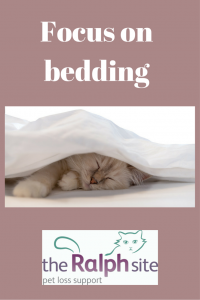
Focus on bedding pinterest1

Dogs

Dogs can also have firm views on where they’d like their bed to be, shunning their lovely warm beanbag for a spot on the doormat or utility room floor, or dragging the bed to a preferred location. Trial and error will usually get you both to a successful end result. Practical considerations are important – dogs will inevitably introduce mud, leaves and worse (depending on what they’ve been rolling in!) into their bed, along with a build-up of moulted fur. For this reason you’ll want to choose bedding that can be easily cleaned, ideally by going in the washing machine.
Cushions and pillows become lumpy after a few washes as the filling moves around, but by choosing one with a removable cover or providing a fleecy blanket on top you can minimise the problem of the smelly bed!

Rabbits and guinea pigs

Living outside, it’s important that your small furry pets have sufficient bedding to keep them warm at night. Wood-shavings and sawdust are not recommended for use in sleeping areas, so choose a good quality meadow hay or timothy hay. Recycled paper bale can also provide a practical and environmentally friendly solution – it’s dust-free (so no allergens or irritants) and highly absorbent.

Hamsters, gerbils and mice

In the wild these animals like to burrow and dig and will make nests out of grass and natural materials – therefore it makes sense to replicate these conditions as far as possible for your pets. Once again, wood-shavings and sawdust are not recommended for use in sleeping areas and so we recommend a bedding made from natural fibres that won’t cause any harm if digested.

And now all this talk of bedding is making us sleepy……. Off for a lie down!……

Until next time, best wishes from Shailen and The Ralph Site team,
The Ralph Site, non-profit pet loss support.

Please note: The Ralph Site is not affiliated with the third-party organisations in any of the links shared here, and the views, ideas and suggestions expressed in this and other blogs are simply shared with the intention of helping you, our friends, take care of the special animals in your lives.
When new beginnings just don’t seem possible

Looking out of the window this morning, the garden is buzzing with activity. Blue tits dart past collecting twigs and moss, checking out nesting sites to raise their new broods. Spring is springing all around us, and yet as nature emerges from her winter slumber and another cycle of renewal and growth begins, this can be the hardest time to cope with the loss of a friend.

We have discussed the grieving process previously, and there are lots of valuable resources and links for anyone living through bereavement on our sister site The Ralph Site. Here’s a reminder of some of our suggested coping strategies – unfortunately we can’t promise that they’ll take the pain of your loss away completely, but they may help you come to the realisation that there are better times ahead.

  1. Don’t let others tell you how to feel, and don’t be hard on yourself if you feel differently than you have in similar circumstances in the past – everyone’s grief is unique
  2. Ask for help. This may be emotional support from friends and family, or practical help from friends (looking after any other pets until you feel ready, arranging memorials etc.) You may also benefit from professional advice and the support of a counsellor and you can find more details here.
  3. Talk to others who have lost pets – listening to their experiences helps to show that you are not alone and may unlock helpful suggestions for dealing with your own grief. You might like to join The Ralph Site’s private Facebook group where members share their thoughts and feelings openly and without judgment. Membership of this private group is by invitation only; all you need to do is click on the link here and leave a request to join.
  4. Create a memorial to your pet – this can be a photo album, a personal website, a posting on a public website or something more traditional, such as a grave marking, planting a tree in a favourite spot or a garden plaque or ornament
  5. Take care of yourself. Eat a healthy diet and make sure you’re getting plenty of sleep and exercise. Although it may be the last thing you feel like doing, exercising releases endorphins which will help to boost your mood
    Maintain a normal routine. This is especially important if you have other pets in the house – they may be experiencing their own grieving process and keeping to an established daily timetable of feeding, walking and grooming helps bring some stability
  6. Look for new sources of joy. Sharing your life with a pet not only provides emotional fulfilment but also fills many hours of every day. Filling at least some of this space with a new hobby, volunteer work or by making new friends will help fill the void
  7. Stay connected to friends. For dog owners, walks provide opportunities to catch up with familiar faces – without these daily encounters valuable social interactions are lost and therefore it’s important to spend time in the company of friends and family to minimise feelings of loneliness
  8. Show any children in the family that it’s OK to grieve – keeping emotions bottled up is not healthy and by encouraging a child to talk about how they feel you’ll be helping both him / her and yourself move through the grieving process more quickly
  9. Don’t rush to fill the space with a ‘replacement’ pet. This is especially important for children – bringing a new hamster home within hours of losing a much-loved pet may give them the message that their grief and sadness can easily be overcome. They may feel disloyal to the memory of their friend and fail to bond with the new pet, or their reactions to future bereavements may be adversely affected.


New beginnings not possible for Pinterest (1)

Of course these tips are not intended as a cure-all for grief, but we hope that some or all of them may bring relief to anyone feeling that they may not feel happy again. Because just as the seasons roll inevitably on, our hearts and minds will find a way to heal themselves in time.

Until next time, best wishes from Shailen and The Ralph Site team
The Ralph Site, non-profit pet loss support

Please note: The Ralph Site is not affiliated with the third-party organisations in any of the links shared here, and the views, ideas and suggestions expressed in this and other blogs are simply shared with the intention of helping you, our friends, take care of the special animals in your lives.
Don’t be neutral about neutering!

Spring is now underway – the season of regrowth and a time when many animals naturally produce their young; indeed, the number of new puppies and kittens often peaks at this time of year. Sadly not all of these new arrivals will be planned and welcome. Moreover thousands, indeed millions, of companion animals are put to sleep every year in ‘kill’ shelters as there are not enough homes for them all. This is why The Ralph Site strongly recommends that you have your pet neutered as soon as possible.

Aside from the oversupply of companion animals in the world, neutering may also have other potential benefits, including for the health of domesticated animals. It can also adjust the behaviour of domesticated animals allowing them to live more comfortably alongside us, for example by helping to reduce aggression, straying, spraying, calling and other anti-social behaviour.

Both spaying (removal of the female reproductive organs) and castration (in males) are routine and straightforward procedures in dogs and cats, and your vet will likely carry out hundreds of them every year. Both operations are generally done as day cases, so your beloved pet will be home with you the same day for some treats and plenty of TLC. Increasing numbers of practices are now carrying out keyhole spays on their female patients; the smaller incision required means a quicker and more comfortable recovery for your little lady, as well as reducing the risk of post-operative infections.

There are already too many unwanted animals in the world!

There are already too many unwanted animals in the world!

The British Small Animal Veterinary Association recommends that as a rule, cats be neutered from four months old, and rabbits and dogs at around six months. It’s always best to discuss the options with your own vet as he / she will be able to give specific advice that’s best suited to your pet’s individual circumstances. It’s widely acknowledged that neutered rabbits of both sexes enjoy improved health (uterine cancers are very common) and happiness (lower testosterone means a calmer male!), and for obvious reasons, un-neutered rabbits would have to live alone, which isn’t fair on an animal that needs company.

It is in everybody’s interests to keep the numbers of unwanted pets as low as possible. If the cost of the neutering procedure is an issue, you might like to know that several organisations are able to provide subsidised rates for responsible carers wishing to neuter their pets, and you can find plenty more information about such schemes, as well as a whole host of advice on the following websites:

Some people are reluctant to neuter their pets because they believe that it causes them to gain weight. Whilst not strictly true, neutering does slow down the metabolism of many animals and therefore you may find that your pet is prone to weight gain after having the procedure. With this in mind, you may wish to consider transitioning your pet onto a food that is designed to provide the correct blend of calories and nutrients for neutered pets – the nursing team at your veterinary practice will be more than happy to advise you further here and many practices offer free weight management clinics.

Until next time, best wishes from Shailen and The Ralph Site team
The Ralph Site, non-profit pet loss support

Please note: The Ralph Site is not affiliated with the third-party organisations in any of the links shared here, and the views, ideas and suggestions expressed in this and other blogs are simply shared with the intention of helping you, our friends, take care of the special animals in your lives.

Chocs away this Easter!

We have discussed the dangers of giving pets human chocolates before, and no doubt most of you are all too aware that you should never give your pets even the smallest taste of the stuff. However, with Easter almost upon us, we thought it would be a good idea to remind you once again (if it avoids just one animal facing emergency treatment over the holidays it will have been worth it!)

Those who have only recently welcomed a pet into their lives may be unaware that chocolate is poisonous for all pets – it contains a stimulant called THEOBROMINE, which is similar to caffeine. The danger this poses to your pet is directly linked to how much he/she consumes (dose-dependent). Cocoa powder and dark chocolate contain the highest proportions of theobromine, and therefore eating even a couple of squares is likely to make a small dog ill. Cats are even more susceptible to the effects of theobromine, but are less likely to be tempted by chocolate.

Common signs of chocolate poisoning to look out for include:

  • Vomiting
  • Diarrhoea
  • Restlessness and hyperactivity
  • Rapid breathing
  • Muscle tension
  • Lack of coordination
  • Increased heart rate
  • Seizures

If you spot any of these symptoms in your pets and suspect that they may have got hold of any chocolate, contact your vet for advice straight away (we always recommend that you check in advance with your practice as to what their emergency cover arrangements are for the long bank holiday weekend). You will almost certainly be advised to take your pet in for urgent assessment and treatment, and it’s a good idea to take the outer packaging with you if possible, so that your vet can assess the likely level of theobromine exposure. It is also important to know that some chocolates can contain either xylitol (a sweetener) or raisins/currants, both of which can be poisonous to dogs even in tiny quantities (non-dose dependent).

There is no antidote for chocolate poisoning. Your vet may make your dog vomit to clear the chocolate out of his/her body. Your dog may then be fed activated charcoal to absorb any remaining theobromine from the intestines. Not a pleasant process, and certainly an upsetting and potentially expensive end to the Easter fun!

Of course, chocolate drops and chews that are formulated specially for pets are perfectly fine to treat those special dogs in your life with.

Until next time, best wishes from Shailen and The Ralph Site team
The Ralph Site, non-profit pet loss support

Please note: The Ralph Site is not affiliated with the third-party organisations in any of the links shared here, and the views, ideas and suggestions expressed in this and other blogs are simply shared with the intention of helping you, our friends, take care of the special animals in your lives.

Choosing a memorial for your pet

Following the loss of any significant presence in our lives, humans have an innate need to remember and celebrate the life of their dear friend. Obituaries, gravestones and memorial services all play an important role in helping us work through our feelings of grief, and can be just as crucial for pet carers. This week we take a look at some of the many options available online.

Slate and stone have long been popular materials for constructing memorials – elegant and enduring, a carved stone will stand for many, many years.
Scottish Slate Gift offers an engraving service so that you can tailor your words in fitting tribute, with prices starting from £53.99.

You can also choose to create your own permanent reminder by taking a cast of your pet’s paws. Plaster casts will not survive the elements if placed in open spots, but can be mounted under a tree or displayed in a sheltered part of the garden. A cost-effective option is a more generic mould, such as this one, which could be pressed into concrete or a new path or patio.

A quick search for ‘pet photo memorial’ returns hundreds of options for poly-resin frames and memorials, most of which can be personalised either with words of your choosing, and / or with the addition of a favourite photo. These memorials tend to range from £8-£20 and thus would be a great option for anyone on a budget.

Popular online currently, this solar-lit memorial cross can be placed close to your pet’s grave, illuminating automatically at dusk.

However, other carers may prefer to mark their pet’s grave or a favourite part of the garden, with a more subtle presence – perhaps an interesting or practical focal point. Popular options might be a string of white solar lights, a young tree, a bird feeder, bench or water feature. Added to mark the passing of a pet, but not specifically featuring their name or image, such garden ornaments form a sensitive reminder of a much-loved pet.

Of course you may prefer to create your own uniquely personal memorial to your pet, and a simple wooden cross or a rockery constructed and planted in a favourite sunny spot are as cost effective as they are meaningful. On the other hand, you may find that it is just too painful to see a reminder of your missing friend every time you set foot in the garden, and choose to remember your pet’s life with quiet inner thoughts instead.
All options are valid and perfectly normal, and as always, the choice is entirely yours.

Until next time, best wishes from Shailen and The Ralph Site team
The Ralph Site, non-profit pet loss support

Please note: The Ralph Site is not affiliated with the third-party organisations in any of the links shared here, and the views, ideas and suggestions expressed in this and other blogs are simply shared with the intention of helping you, our friends, take care of the special animals in your lives. The Ralph Site can also not vouch for the quality of the products mentioned.