When we hurt ourselves physically, most of us know where to find the plasters, painkillers, ice packs, or bandages. We learn from an early age what helps when our bodies are injured.
Emotional pain is different.
Few of us are given a toolbox for grief. Most of us learn about bereavement only when we find ourselves living through it. Even then, the advice can feel overwhelming. One person tells us to stay busy. Another encourages us to sit with our feelings. Some people suggest talking, while others swear by distraction. What helps one grieving person may feel completely wrong for someone else.
The reality is that grief doesn’t come with a universal instruction manual.
This is especially true when you’re grieving an animal companion. The loss can touch every corner of your life, from the obvious sadness of missing them to the unexpected moments when you realise how many routines and habits in your life were built around their presence.
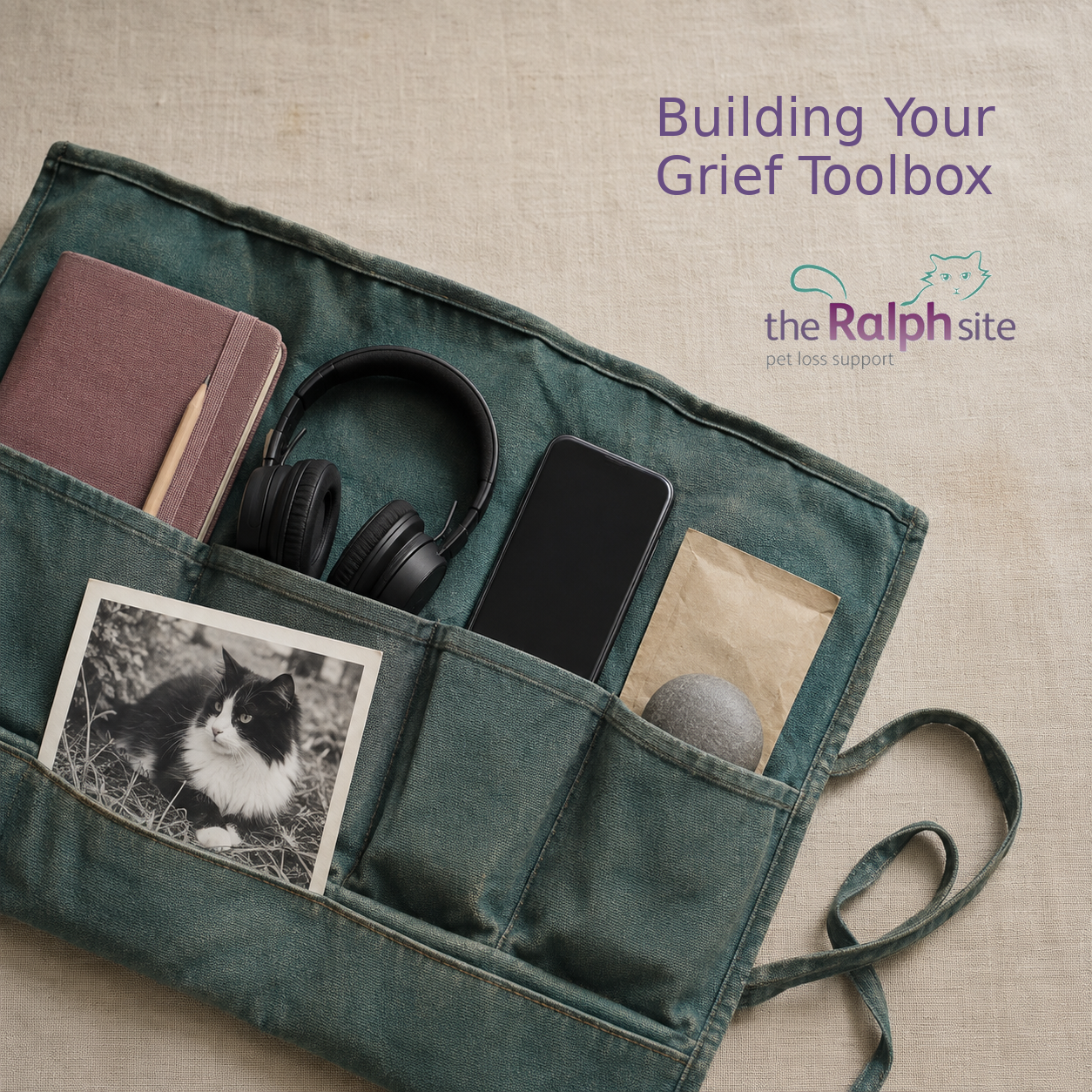
Over time, many bereaved animal carers find themselves collecting things that help. These might be activities, people, places, practices, memories, or sources of support. Some will help you express your grief. Others may help you take a break from it. Some may help you remember your companion, while others may help you reconnect with the world around you.
Together, these become your grief toolbox.
The important thing to remember is that no two toolboxes will look the same. What brings comfort to one person may do little for another. Even your own toolbox may change over time as your grief changes and evolves.
The goal isn’t to find a magical tool that makes grief disappear. The goal is simply to discover what helps you carry it.
Tools that help you express your grief
One of the challenges of grief is that it often feels bigger than words.
You may have thoughts that go round in your mind on a loop, emotions that seem to arrive out of nowhere, or memories that surface when you least expect them. Sometimes grief needs somewhere to go.
For one person, this might mean filling a journal with thoughts and memories. Someone else may never write a diary entry in their life but spend hours creating a photo book, painting a portrait, or putting together a memory box. Another person may find themselves talking to their animal companion while walking, driving, or sitting quietly at home.
There can be something surprisingly powerful about taking feelings that are swirling around inside you and giving them a shape outside of yourself. It’s almost as though it makes the grief tangible and, therefore, more manageable.
Many bereaved animal carers write letters to their companions, saying the things they wish they could still say. Others create playlists that remind them of happy memories or listen to music that helps them access emotions that feel stuck beneath the surface.
You don’t have to be artistic, creative, or particularly good with words for these activities to help. Their value isn’t in what they produce but in what they allow you to express.
Sometimes the act of expression itself is enough.
Tools that help you stay connected
Grief can be incredibly isolating.
Even when people care about us deeply, they may not fully understand what we’re experiencing. This can feel especially true after the loss of an animal companion, when society sometimes struggles to recognise the significance of the bond we shared.
You may have experienced well-meaning comments that left you feeling misunderstood (here are seven things that people shouldn’t say to bereaved pet carers but often do). Perhaps someone suggested getting another animal straight away or implied that your grief shouldn’t be as intense as it is.
Experiences like these can make it tempting to retreat into yourself, yet connection is often one of the most valuable tools we have.
For some people, connection means talking openly with trusted friends or family members. For others, it means speaking to a pet bereavement counsellor who understands the unique aspects of animal loss. Some people find comfort in support groups or online communities like The Ralph Site’s private Facebook group where they can share their experiences with others who truly understand.
Connection doesn’t always mean talking about your grief.
Sometimes it simply means spending time with people who accept where you are emotionally and don’t expect you to be anything other than yourself.
Your toolbox may contain one person you can call at any hour, a support group you visit regularly, or an online community whose posts you read when you’re having a difficult day.
Whatever form it takes, connection can remind us that we don’t have to navigate grief alone.
Tools that give your mind a rest
Many people feel guilty when they discover moments of relief from their grief.
You may find yourself becoming absorbed in a television programme, a novel, a hobby, or a game and then feel uncomfortable when you realise you haven’t thought about your loss for an hour or two.
Some people even worry that these moments mean they are forgetting their companion or grieving incorrectly.
But grief is hard, exhausting work. Bereavement places enormous demands on our emotional and mental resources. It’s little wonder that so many people experience exhaustion, brain fog, and difficulty concentrating.
Just as your body needs rest after physical exertion, your mind sometimes needs opportunities to recover from the intensity of grief.
For one person, this may mean spending an evening with a “comfort show” TV series they’ve watched countless times before. Someone else may lose themselves in a fantasy novel, a jigsaw puzzle, knitting project, craft activity, or favourite video game. Another person might spend a couple of hours researching an entirely unrelated topic simply because it gives their mind something else to focus on.
These moments aren’t necessarily avoidance. We prefer to think of them as restoration (the Dual Process model of grief describes them as “restoration-orientated” activities that provide a healthy break from the pain).
You do not have to actively engage with your grief every second of every day to be grieving deeply. Giving your mind opportunities to rest may help you return to your grief with greater emotional resources when you’re ready.
Tools that reconnect you with your body
Grief doesn’t just affect our emotions.
Many people notice physical symptoms too. You may feel exhausted, restless, tense, nauseous, shaky, heavy, or strangely disconnected from your surroundings. Sleep can become difficult. You may have no appetite or, alternatively, find yourself comfort eating. Even everyday tasks can feel harder than they used to.
Because grief affects both mind and body, many people find comfort in activities that help them reconnect with the physical world.
This doesn’t have to mean you have to sign up for a marathon or throw yourself into an intense fitness regime!
For some people, a gentle walk is enough. Others find comfort in gardening, yoga, swimming, cycling, or spending time outdoors. One bereaved person may feel calmer after digging over a flowerbed, while another finds peace sitting quietly beside a river watching the world go by.
Nature often plays a special role in grief. Many people describe feeling comforted by the changing seasons, birdsong, trees, flowers, and the rhythms of the natural world. When our own lives feel as though they’ve been turned upside down, there can be something grounding about connecting with things that continue regardless.
Sometimes the goal isn’t to feel happier, it’s just to feel present.
Tools that help you remember
One of the greatest misconceptions about grief is that healing requires forgetting, but most bereaved people know that this isn’t what they want at all.
We don’t want to leave our companions behind. We want to find ways to carry them with us and continue our precious shared bond.
This is why remembrance becomes such an important part of many people’s grief toolboxes.
One person may create a memory box filled with treasured belongings, photographs, and handwritten notes. Another might plant a tree or rose bush in their companion’s memory. Some people display photographs throughout their home, while others light a candle on special anniversaries or make donations to animal charities in honour of their companion.
These rituals can be surprisingly powerful because they acknowledge that the relationship mattered.
Your animal companion existed. They changed your life and their influence will continue long after their physical presence has gone.
Finding ways to honour that bond can help transform grief from something that feels purely painful into something that also holds love, gratitude, and remembrance.
Tools for difficult days
Most people discover that grief isn’t experienced in a straight line. There will be days when coping feels manageable and days when it feels impossible.
Anniversaries, birthdays, adoption dates, Christmas, seasonal changes, and significant life events can all bring grief back to the surface. Equally, some of the hardest moments arrive completely unannounced. You might hear a familiar sound, discover an old toy tucked away somewhere, or catch sight of an animal who looks just like your companion.
When emotions are running high, it can be difficult to think clearly. This is why it can be helpful to think about your grief toolbox before you desperately need it.
- What usually helps when you’re overwhelmed?
- Who can you contact?
- What activities make you feel grounded?
- What reminders bring comfort?
You don’t need all the answers at once. Building a toolbox is something that happens gradually. With time, you’ll start to notice which things help and which don’t.
You may even find it useful to keep a written list somewhere safe so that on difficult days you don’t have to think too hard about what to do next.
Your toolbox will change over time
Perhaps the most important thing to remember is that your grief toolbox isn’t fixed.
The things that help in the first days and weeks after a loss may be vastly different from the things that help months or years later. Some tools may become less important. New ones may appear unexpectedly.
This is completely normal.
Grief changes, and we change alongside it.
Building a grief toolbox isn’t about finding the perfect solution or reaching a point where you no longer miss your animal companion. It’s about discovering the people, activities, places, and practices that support you as you learn to live with your loss.
Over time, you’ll gather your own collection of tools. Some will help you express your grief. Some will help you remember. Some will help you rest. Some will help you reconnect with life beyond your loss.
Most of all, they will remind you that grief is not something you have to carry empty-handed.
There is no right grief toolbox. There is only the one that helps you.
Just know that you are not alone,
Shailen and The Ralph Site team
The Ralph Site, non-profit pet loss support