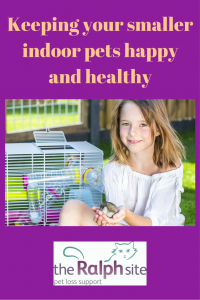
Keeping your smaller indoor pets happy and healthy – Part 2

Those of you who care for more unusual pets will know that providing a suitably stimulating and safe living environment is essential for their health and well-being, and just as important as offering the right diet. This week we take a look at some of the key considerations when caring for reptiles and amphibians, for those of you who may be at the beginning of your friendship with an indoor pet. Of course, the introductory information included here is necessarily basic – we always recommend researching the needs of your pets fully before you welcome them home, along with speaking with the re-homing centre in order to ensure that you’re comfortable with the level of responsibility required and can accommodate the established routine of your new pet.

This week we take a look at the basic needs of some popular reptiles and amphibians:

Lizards

Leopard Geckos are perhaps the most suitable lizards for anyone new to lizards and exotic pets – they are small, easy to handle and do not require specialist UV lighting in their tanks as they are nocturnal creatures. Bearded dragons are also popular in the UK as they generally have a docile temperament, although their housing requirements can be more complex due to their larger size and need for UV lighting.

Welcoming a lizard into your life requires commitment – as with any pet it’s important to make sure that you understand the responsibilities and time involved in providing a full and happy life for your pet. Some basic considerations might include:

  • Check the adult size of your pet and choose a suitably large tank
  • Is there a local vet who specialises in the care of exotics?
  • Remember that geckos can live for 20 years
  • Geckos can be housed in groups of two or three, but there should only be one male per tank (and obviously housing females with a male will inevitably lead to baby geckos!)
  • As insectivores, geckos require a steady supply of insects in order to remain healthy

Snakes

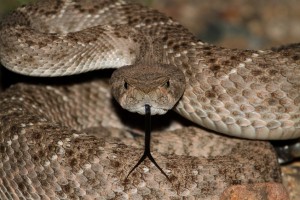
Like any animal, snakes have their own individual temperaments and personalities, and so the relationship you develop with him / her will be truly unique. Popular species here in the UK include corn snakes and Royal Pythons. Caring for snakes is very rewarding but we would always recommend thoroughly researching the requirements of your chosen species in order to make sure that the tank and diet you provide are appropriate.

  • Feeding snakes is not for the squeamish – you’ll need to provide a ready supply of mice pinkies, smaller than 1.5 times your snake’s girth.
  • Snakes can live for 10-20 years.
  • Handling should be limited to 10-15 minutes at a time in order to prevent the snake’s core temperature dropping.
  • All reptiles, snakes included, require a thermogradient in their living environment. In practice this means placing a guarded heat lamp at one end of your pet’s vivarium, with the opposite end left cool. The ‘basking zone’ temperature should be 28-30 oC, and the cool end 20-24 oC.
  • A humidity of 40-50% is also required in order to prevent your snake developing breathing problems and skin problems.


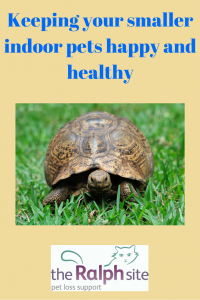
kEEPING YOUR SMALLER INDOOR PETS HAPPY AND HEALTHY part 2 pinterest


Tortoises

As with all pets, it’s important that your tortoise comes from a reputable home – please consider re-homing animals in need of a forever home as a first choice. We do not recommend pet shops or garden centres for finding a pet tortoise, instead details of reputable UK breeders who are passionate about these amazing pets and who follow strict welfare codes can be found at here.

  • Happy tortoises are famously long-lived, so it’s important to consider future plans for your pet.
  • Tortoises need a diet high in fibre, vitamins and minerals, but low in fat and proteins – they feed mainly on green leaves such as charlock, chickweed, clover, dandelion and groundsel. Salad and green vegetables should be fed raw and in moderation. Please be aware that ragwort is toxic for tortoises.
  • If you also share your home with a dog, great care must be taken to ensure that your tortoise has a safe and secure enclosure that the dog cannot enter.
  • Tortoises are not native to the UK and thus require daily access to heat and light in order to stay healthy and happy. Your indoor enclosure should feature a specially-designed UVB light and heat lamp.
  • Winter hibernation is a normal part of a healthy tortoise’s life, and it’s important to prepare your pet properly. The topic is covered in far more detail here.

Of course we have only been able to cover a very small introduction here to the complex care requirements of these exotic animals. Please always research thoroughly and consider carefully the particular needs of your pet before making the commitment to his / her care; this is especially important for exotic animals such as lizards, snakes or tortoises.

Until next time, best wishes from Shailen and The Ralph Site team

The Ralph Site, non-profit pet loss support 

Please note that The Ralph Site very strongly encourages people to only bring new companion animals into their home that they have rehomed from a rescue centre or that are otherwise unwanted or being subjected to mistreatment; with so much over-supply of unwanted animals, we cannot condone private breeding or indeed removing non-domesticated animals from their natural outdoor environment to be kept as pets.

Keeping your smaller indoor pets happy and healthy – Part 1

Please note that The Ralph Site very strongly encourages people to only bring new companion animals into their home that they have re-homed from a rescue centre or that are otherwise unwanted or being subjected to mistreatment; with so much over-supply of unwanted animals, we cannot condone private breeding or indeed removing non-domesticated animals from their natural outdoor environment to be kept as pets.

According to the latest set of UK figures published by the Pet Food Manufacturers Association (PFMA), 46% of British households share their homes with a pet. And whilst cats and dogs are our nation’s most popular companions, considerable numbers of us have plenty of love to give our smaller furred, feathered and scaled friends:

  • The indoor fish population is estimated at a massive 19,900,000, living in around 9% of UK homes
  • There are 500,000 indoor birds
  • 400,000 hamsters
  • 300,000 lizards
  • 300,000 snakes
  • 200,000 tortoises and turtles

Those of you who care for these smaller indoor pets will know that providing a suitably stimulating and safe living environment is essential for their health and well being, and just as important as offering the right diet. We thought it might be helpful to look at some of the key considerations when looking after smaller pets, for those of you who may be at the beginning of your friendship with an indoor pet. Of course, the introductory information included here is necessarily basic – we always recommend researching the needs of your pets fully before you welcome them home, along with speaking with the re-homing centre in order to ensure that you’re comfortable with the level of responsibility required and can accommodate the established routine of your new pet.

This week we take a look at the basic needs of birds and hamsters:

Birds

  • Budgies and canaries can live up to 15 years, with large parrots clocking up as many as 60 years
  • Birds flourish with lots of time and attention and will create strong bonds with their carer, developing their own unique personality traits. They also pick up on your mood and can become depressed if not given sufficient attention, becoming prone to stress-related conditions such as pulling out feathers
  • Most birds enjoy company from their own kind, so it’s always best to provide an avian friend
  • Good quality birdseed forms the basis of a domestic bird’s diet and is widely available -depending on your pet’s species, additional supplements are often recommended (such as iodine for budgies)
  • Buy the largest cage you can afford and make sure it’s appropriate for your bird’s adult size. Furnish it with plenty of toys and perches, as well as a birdbath, and use bird-friendly cleaning products to keep the cage fresh. Always give your pet the opportunity to spread his / her wings for lengthy periods each day
  • Make sure to cover any mirrors and windows when your bird is exercising out of the cage each day – flying into these can injure your pet severely

Keeping your smaller indoor pets happy and healthy pinterest

Hamsters

  • Typically hamsters live for up to 2 years. As nocturnal animals, they are the ideal pet for anyone who works a ‘normal’ week, as they will sleep whilst you’re out during the day
  • The most popular species in the UK are Syrians, the Russian dwarf Campbell and the Roborovski
  • Hamsters need lots of room so buy a cage that’s as large as possible. Multi-levels and tunnels are great for exercise and exploration, and cages with wire sides and tops will provide your hamster with plenty of climbing opportunities! A wheel will provide endless fun, and cardboard tubes and wooden chewing blocks will help keep your pet’s teeth in check, as well as providing stimulation.
  • Although hamster balls are popular and offering animals the opportunity to exercise is important, there are concerns that such products may, in fact, be stressful for hamsters and the RSPCA for example does not recommend their use.
  • Provide plenty of bedding and litter material for your hamster to burrow in and make his / her bed from. Dust-free wood shavings and shredded paper are great options
  • As with all pets, your hamster will need access to a continual supply of fresh water.
  • Commercially produced hamster food is the best diet, supplemented with small quantities of green vegetables and apples. Avoid grapes and rhubarb as these can be poisonous for hamsters.
  • Hamsters are generally solitary animals with their own kind but are sociable with us humans, so it will be easy to get into a routine of handling your pet every day to form strong bonds.

Next week we’ll look at keeping rescued reptiles and amphibians, so until then, best wishes from Shailen and The Ralph Site team

The Ralph Site, non-profit pet loss support

Please note: The Ralph Site is not affiliated with the third-party organisations in any of the links shared here, and the views, ideas and suggestions expressed in this and other blogs are simply shared with the intention of helping you, our friends, take care of the special animals in your lives.

Don’t let your rabbit get struck by flystrike

Just when it seems like we might finally be able to enjoy some sunshine and warmer weather, along comes another reminder that increasing temperatures can bring increased risks for your pets! Sorry about that!

Those of you with rabbits in your lives will probably already know about flystrike – a painful and potentially fatal condition spread by the bluebottle flies that are more active in the warmer months. Attracted by the scent of urine or faeces, the fly will lay its eggs on a rabbit’s skin. Unless removed by careful grooming, these eggs hatch into maggots that begin to eat the poor animal’s flesh. Horrible as this is to contemplate, the condition can escalate very quickly, and sadly many rabbits with flystrike die.

Dont let your rabbit get struck by flystrike pinterest

Rabbits who are unable to clean themselves effectively are particularly at risk – for example elderly, injured or sick pets – as are those kept in hutches and runs that are not regularly cleaned. Otherwise healthy rabbits suffering from temporarily loose stools are also vulnerable.

If you ever find any visible maggots on your pet, remove these with tweezers and take the rabbit to see a vet immediately – this is a genuine emergency situation as affected rabbits will not only be in great pain from their wounds, but can also be in danger of experiencing toxic shock.

Fortunately there are some simple steps you can take in order to greatly reduce the risk of your beloved rabbit suffering with flystrike:

  • Regular grooming is essential, removing any matted fur or faecal matter from around the bottom.
  • Removing soiled bedding and litter daily, and giving the hutch and run a thorough clean at least once a week.
  • Checking your rabbit daily for sores – the condition takes hold very quickly.
  • Applying an animal-safe spray or powder designed to repel flies – Rearguard is a popular choice for rabbits, and your vet can also offer specific advice that’s tailored to your pet.
  • Planting rabbit-safe flowers and herbs known to repel flies close to the hutch (suitable varieties are listed in the flystrike information section of the Rabbit Welfare Society’s website.
  • Placing fly paper or insectocutors above your rabbit’s hutch, safely out of harm’s way.

However, the bottom line (excuse the pun!) is that it’s simply not possible to eliminate all risk from flystrike. Outdoor rabbits will be exposed to flies all year round, although the problem is known to be more commonplace in the summer. Vigilance is by far your best weapon against this horrible condition, and it’s never a hardship to spend time bonding with your bunny as you give him/her a good grooming and a thorough checking over.

Until next time, best wishes from Shailen and The Ralph Site team,
The Ralph Site, non-profit pet loss support

Please note: The Ralph Site is not affiliated with the third-party organisations in any of the links shared here, and the views, ideas and suggestions expressed in this and other blogs are simply shared with the intention of helping you, our friends, take care of the special animals in your lives.
Good night, sleep tight?

At The Ralph Site  we talk a lot about bereavement – how it feels and why it’s important not to let others judge you for how you react to the loss of your friend. One commonly experienced   symptom of bereavement is the disruption of your normal sleeping pattern, and so this week we’re going to look at how this might manifest itself, and more importantly, what you can do to take matters back into your own hands.

pinterest

Almost everyone will have problems sleeping at some point in their life – a period of stress at work, physical discomfort or worrying about loved ones can all play havoc with your eight hours a night. Usually the disruption is short-lived, but prolonged sleep problems can negatively affect your mood, energy level and productivity at work, as well as putting strain on relationships. Such sleep problems can be categorised as follows:

  •  Insomnia – difficulty falling asleep, waking up in the night or waking much earlier than usual
  • Oversleeping
  • Night terrors
  • Sleep walking – aside from putting you in danger of physical harm, regular sleep walking will result in a reduction in the quality of sleep, so that you feel tired all the time.

Like most sleep problems, those resulting from feeling lost and low after the death of a pet will eventually lessen with time. However, there are some simple steps you can take to hasten this process, so that your sleep patterns return to something more like normal and you wake refreshed and ready to face the new day again:

  • Establish a routine. Wherever possible, try to go to bed and wake up at the same times every day – this will help your body associate the time between with sleep. Only go to bed when you feel tired enough to sleep – this may be later than you’re used to but if it means you fall asleep quicker, your body will benefit from the same amount of sleep without your anxiety levels rising as you lay in bed early, watching the minutes tick by.
  • Make your sleeping environment comfortable and quiet. Collect plenty of blankets and pillows in case you feel cold and remove any disturbing noises – ear plugs can help if you have a partner who snores, or you may wish to move to another room altogether! Blackout blinds will keep the room dark, or a nightlight will take the edge off the darkness if that bothers you.
  • Relax before you go to bed. Tempting as it is to check your social media one last time,experts recommend switching off phones and tablets half an hour before retiring.
  • Instead, why not choose a relaxing book – most people find that reading in bed soon makes them feel tired!
  • Catch up on lost sleep in the day. Sometimes a power nap can be just the thing to revive flagging energy levels, but take care to make sure they don’t become a regular feature at set times – this will have a detrimental impact on the normal sleep routine you’re trying to establish.
  • Pay attention to your diet and exercise regime. You might wish to avoid stimulants such as alcohol, nicotine and caffeine in the evenings. Also, try not to eat and drink too much after 8pm as a full stomach can prevent you falling asleep, whilst a full bladder will prompt you to wake up in the early hours!
  • Keep a sleep diary. Jotting down details about how you’re sleeping can identify patterns – perhaps you have problems sleeping after eating certain foods, or at particular times of the month.
  • Try a herbal remedy. A few drops of lavender, valerian, passionflower or lemon balm on your pillow can help relax your body and mind into a restful sleep. Or add a few drops to the bathwater, followed by a long wallow with calming music and candlelight – that should do the trick!

Of course, prolonged sleep problems can sometimes have more deep-seated causes (for example, oversleeping can be linked with underlying medical conditions such as diabetes and heart disease) – professional help may be useful in addressing and overcoming these if so. You can find lots more general advice on how to sleep better on the NHS Choices website.

Until next time, best wishes from Shailen and The Ralph Site team.
The Ralph Site, non-profit pet loss support

Please note: The Ralph Site is not affiliated with the third-party organisations in any of the links shared here, and the views, ideas and suggestions expressed in this and other blogs are simply shared with the intention of helping you, our friends, take care of the special animals in your lives.
Fighting the fleas and worms

Whilst parasites can be a problem all year round, once the weather starts to warm up those of us with pets in our lives know that it’s time to think about getting our pets’ flea and worm protection up to date again. Whilst nobody likes to think of parasites living in and on their beloved pets, sadly it is an inevitable reality for any animal exposed to the great outdoors (and in no way reflects on the cleanliness of your pet or your home). Even indoor pets can come into contact with fleas and worms if they mix with other pets that do go outside, and it’s even possible for parasites to be brought into the home on our shoes.

We think it’s always better to be safe than sorry, so we’ve put together a reminder about some of the most common types of parasitic pests, along with some suggestions of products to help you tackle them.

Fleas

If you see your pet scratching excessively, notice small scabs and spots on their skin, or find small brown specks of flea dirt in their fur (particularly round their bottoms), then you may have a flea problem. Fleas live and feed on pets – females lay eggs on the host animal, which then drop off into your pet’s bed or favourite resting spot. Therefore it’s important to treat your home too, with a thorough vacuuming followed by the application of specially formulated flea spray, in addition to treating your pet. In this way you can break the life cycle of the flea and protect your cat, dog or rabbit from an immediate re-infestation.

Fortunately, there are a number of highly effective flea treatments available, so you’re sure to find one that works for you and your pet.

Fighting the fleas and worms (1)pinterest

Worms

Rabbits do not tend to suffer with worms, whilst the most common in cats and dogs are:

Roundworms

Looking like strings of spaghetti or elastic bands, they are picked up from the environment, as well as being passed from animal to animal, and possibly on to the two-legged members of the household! Roundworm eggs are almost invisible to the human eye, so can be difficult to spot.

Tapeworms

You may find segments of these worms excreted in your pet’s faeces (they look like flattened grains of rice). An intermediate host, such as a passing flea, transmits tapeworms and therefore it is advisable to treat your pet against both worms and fleas.

However, no worm control will prevent re-infestation; the products only kill worms already present rather than providing protection against future problems. Therefore it is recommended that you treat your pet regularly, especially if he or she hunts or scavenges.

And don’t forget, if you need further advice on any aspect of parasite control, your veterinary practice will be only too happy to recommend solutions that suit your pet’s lifestyle and provide the safest and most effective control.

Until next time, best wishes from Shailen and The Ralph Site team
The Ralph Site, non-profit pet loss support

Please note: The Ralph Site is not affiliated with the third-party organisations in any of the links shared here, and the views, ideas and suggestions expressed in this and other blogs are simply shared with the intention of helping you, our friends, take care of the special animals in your lives.