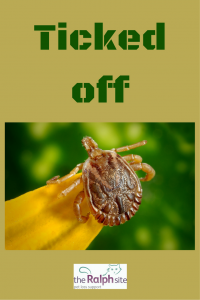
Ticked off

A study by scientists at the University of Bristol was published recently, investigating the prevalence of ticks in the UK’s pets. Researchers working for the Big Tick project studied 15,000 dogs across the country that had visited the vet for an unrelated reason. The data showed that 31% of these dogs had at least one tick present, unbeknown to their carers, with the highest number of cases found in the southwest, East Anglia and Scotland. The tick population is rising year-on-year, and whilst higher rates of tick-borne disease are currently found in continental Europe than here in the UK, there is some evidence that the number of cases of Babesiosis (a malaria-like condition transmitted by ticks) is growing in the East of England. It’s more important than ever to check your pets regularly for ticks.

ticked-off

What’s the problem with ticks?

Ticks can transmit bacteria, causing a range of potentially serious conditions such as Lyme disease; so if you spot one it’s important to remove it correctly as soon as possible. It’s a good idea to get into the habit of checking your pet for ticks after a walk and carefully removing any you find. Using a special tick remover (available online or from your vet), or a pair of fine-tipped tweezers, grasp the tick as close to the skin as you can and pull upwards with a twist, slowly and firmly. Take care not to leave the mouthparts behind as these can become infected.

The signs of Lyme disease in pets can be quite subtle and so your vet will carry out blood tests to accurately diagnose the condition if they suspect your pet may be affected. Treatment is usually a four-week course of suitable antibiotics.

Possible signs of Lyme disease include:

  • Lethargy
  • High temperature
  • Swollen joints
  • Enlarged lymph nodes
  • Reluctance to eat / reduced appetite

Lyme disease can also affect humans and often presents with a characteristic ‘bulls eye’ rash. This is a serious disease and you should seek medical advice if you are concerned. More information can be found here.

What can I do to protect my dog or cat from ticks?

  • We recommend using a monthly tablet or spot on treatment to protect against ticks. It is best to ask your vet for advice as to which is best for your pet as some supermarket-bought spot-on treatments for dogs can be fatal to cats. 
  • Check your pet regularly after they have been outside – ticks live in areas of dense vegetation and long grass and can easily attach themselves to a passing dog or cat.
  • If you are taking your pet abroad on holiday, under the conditions of the Pets Travel Scheme you must ensure your pets are fully protected against ticks whilst you are away.
  • If your pet exhibits any of the symptoms above or becomes generally unwell, please call your vet for advice.

Until next time, very best wishes from Shailen and The Ralph Site team

The Ralph Site, non-profit pet loss support

Please note: The Ralph Site is not affiliated with the third-party organisations in any of the links shared here, and the views, ideas and suggestions expressed in this and other blogs are simply shared with the intention of helping you, our friends, take care of the special animals in your lives

World Animal Day

This week marks World Animal Day, which takes place each year on October 4th, the feast day of St Francis of Assisi who is the patron saint of animals and the environment. First established in 1931 at a convention of ecologists in Florence as a way of highlighting the plight of endangered species, the mission of World Animal Day remains hugely important:

world-animal-day-pinterest

“To raise the status of animals in order to improve welfare standards around the globe. Building the celebration of World Animal Day unites the animal welfare movement, mobilising it into a global force to make the world a better place for all animals. It’s celebrated in different ways in every country, irrespective of nationality, religion, faith or political ideology. Through increased awareness and education we can create a world where animals are always recognised as sentient beings and full regard is always paid to their welfare.”

You can find out much more at www.worldanimalday.org.uk

The Great British public has historically supported animal welfare very well, and animal charities receive millions of pounds in donations every year. They receive no state funding for their important work, although the Treasury does exempt donations from income tax in the form of Gift Aid. However, a study by the Charities Aid Foundation found that animal welfare organisations received only a very small proportion of total donations – just 7% of the amount donated to charities in the UK in 2014. One reason for this relatively low support, despite the British famously being a nation of animal lovers, is perhaps because of the sheer number of charities competing for funding. With so many options available it’s tempting to give your hard-earned money to the big players that everyone knows.

Of course, any money donated to causes helping animals is to be celebrated, but it feels important to acknowledge the smaller, regional and local charities struggling to do great things in our own neighbourhoods. Perhaps anyone considering giving money to an animal charity, either as a regular gift, a one-off donation or through a legacy in a will, might also consider undertaking a little bit of research to identify the charities that make the biggest difference to the health and welfare of animals. In this way we can ensure that any money we do give is working the hardest for our four-legged friends.
If you would like to find out more about charities close to you and make a donation in honour of World Animal Day, you can find details of all the UK’s registered charities here.

Some of the most practical help you can give is not financial. Perhaps you have a spare hour to:

  • Walk a dog?
  • Deliver leaflets?
  • Help out at the charity’s shop?
  • Hold a jumble sale or cake bake to raise much-needed funds?
  • Instigate a petition and circulate via social media?
  • And don’t forget the collection points for pet food and toys at many supermarkets – next time you’re doing the shopping, why not pop an extra tin of food in the trolley and donate it to an animal in real need?

However you choose to help, your contribution will go a long way to helping give animals a better deal – which of course is important at any time of year, not just around World Animal Day.

Until next time, very best wishes from Shailen and The Ralph Site team
The Ralph Site, non-profit pet loss support

Please note: The Ralph Site is not affiliated with the third-party organisations in any of the links shared here, and the views, ideas and suggestions expressed in this and other blogs are simply shared with the intention of helping you, our friends, take care of the special animals in your lives.

Saying goodbye at home

As many friends of The Ralph Site  know all too well, saying goodbye to our companions is impossibly hard; perhaps hardest of all when we are called on to make the active choice to end the life of a dear friend. Of course, taking the decision to euthanise a beloved pet is only ever made with compassion and love, ‘the kindest thing’, but that does not make the weight of the decision (and its consequences) any easier to bear.

saying-goodbye-at-home-pinterest

Many carers find that this incredibly difficult time is made more bearable when it takes place in the familiar and comfortable surroundings of home, reducing stress both for the pet and his/her carer. Fortunately such home visits are now being offered by more and more practices, with many mobile euthanasia services also being established across the UK.
We have listed some of these for your convenience here.

Please be aware that the list is not exhaustive; if you have personal experience of another service and would like to make a recommendation, please do let us know and we will add the details to our growing records. You may also find that your vet is happy to recommend a local at-home euthanasia service, so it’s always worth asking the team at your practice for their thoughts and advice.

As with every aspect of caring for pets, the decision you make should be right for you and your companion – don’t be swayed by other people telling you what’s ‘right’. In our experience, there are a number of considerations to bear in mind if you are thinking about saying goodbye to your pet at home when the time comes:

Benefits:

  • Your pet will be surrounded by familiar family members and personal belongings
  • Appointments can be scheduled outside normal working hours
  •  There’s no need to transport your pet to the practice
  • Your grief will be private
  •  Arrangements to cremate your pet can begin immediately, with no need for you to transport his/her body

Disadvantages:

  •  The visiting vet may not be known to your pet
  •  Lingering associations with the room in which euthanasia takes place
  • Additional costs of home visits
  •  If events take an unforeseen turn, limited medical and clinical resources are available outside the practice setting
  •  It is not uncommon for pets to pass urine or stools during the euthanasia, and it therefore can be a little messy (from a practical perspective, vets will often bring absorbent pads to place under your pet, but the emotional impact of watching this happen at home is important to consider)

Ultimately the decision as to where and when your pet is euthanised is always yours, and if taken in time and with love, it will always be the right one, whatever you decide.

Until next time, best wishes from Shailen and The Ralph Site team
The Ralph Site, non-profit pet loss support
Please note: The Ralph Site is not affiliated with the third-party organisations in any of the links shared here, and the views, ideas and suggestions expressed in this and other blogs are simply shared with the intention of helping you, our friends, take care of the special animals in your lives.

Pet insurance – is it worth it?

According to one UK credit comparison site, the lifetime cost of caring for our beloved pets may well work out to be more than we imagine! At this site you can calculate the likely cost of taking care of your pet, and see the ‘average’ results they calculate. Notional lifetime care costs are as follows, and remember that these only take into account the provision of routine preventative veterinary care:

  •  Small dogs £22,344
  •  Large dogs £19,577 (lower life expectancy)
  •  Cats £15,147
  •  Rabbits £7,405
  • Hamsters £1,052

Of course, friends of The Ralph Site know that welcoming a pet into your life is not to be undertaken lightly, and cost is only one factor affecting the decision. Yet it is true that financial considerations are very important to address, and this is even more crucial when considering how you might deal with an unexpected vet bill.

pet-insurance-is-it-worth-it-pinterest

Specialist veterinary care is, by necessity, expensive and there is no NHS for pets. According to Money Super Market.com , the average vet bill is now £300, with costs running into the thousands for emergency surgery and prolonged treatment of ongoing conditions. Choosing whether or not to insure your pet against unforeseen accidents or illness is always a personal decision, but we recommend that every pet carer considers the pros and cons very carefully. We’ve put together this simple summary of the types of policy available, but this is only a general introduction and you should always research the right policy for you, checking the small print carefully to ensure that cover is adequate for your needs.

There are three main types of pet insurance:

  1.  Lifetime cover. As the name suggests, such policies run indefinitely for as long as you continue to pay the premiums. They offer comprehensive cover for your pet for life, giving you the ultimate peace of mind. Lifetime policies are the most cost effective option if your pet has a condition requiring regular care.
  2. Annual policies. These last for a year, after which your insurer will propose a new premium if you wish to continue cover. If you have made a claim in the previous year, the monthly costs may increase and conversely, the amount of cover for future use may decrease. Most insurers set limits for the maximum amount they will pay out, either for a particular condition or in a calendar year. It’s very important to check what these limits are before taking out your policy, as if your dog requires monthly treatment or expensive drugs for the rest of his / her life, but your policy only covers £4,000 of care per condition, you’ll soon find that funds have run out. It’s worth noting that most insurers will exclude any pre-existing conditions from cover when a new policy is taken out, so check carefully before switching providers if your pet is current being / has been treated for a specific condition.
  3.  Accident only. Any treatment for illness is excluded from cover, which can make premiums very low. Do think carefully about choosing this option though – a survey of Which? members showed that 70% of pet insurance claims were for illnesses.

In addition, most policies offer compensation for some or all of the following:

  •  Death by accident or illness (usually for cats aged up to 10 years or 8 years for a dog)
  • Advertising. If your pet goes missing you can claim back the cost of putting up posters and paying a reward
  • Third-party liability (dog policies only). If your pet chews a valuable rug whilst visiting relatives, your insurer will cover the cost. Cats are legally considered to be ‘free spirits’ and thus their carers cannot be held liable for any damage they cause!
  • Overseas travel cover
  •  Cattery and kennel fees if you are hospitalised for at least two consecutive days
  •  Euthanasia, cremation and burial
  •  Dental treatment

Ultimately, only you can decide whether pet insurance is right for you and your pet. Whilst it may seem like an unnecessary expense when your pet is well, we think that the peace of mind that comes from knowing that you will never have to compromise the care given to your pet should the unthinkable happen is priceless.

Until next time, best wishes from Shailen and The Ralph Site team
The Ralph Site, non-profit pet loss support

Please note: The Ralph Site is not affiliated with the third-party organisations in any of the links shared here, and the views, ideas and suggestions expressed in this and other blogs are simply shared with the intention of helping you, our friends, take care of the special animals in your lives.

Focus on… Dental care

Sadly all too common in cats and dogs, dental disease can cause pain and discomfort for your pet long before you realise there is a problem. Dogs and cats are very good at hiding the fact that they feel under the weather and so you may not realise there is a problem until the visible symptoms become relatively advanced. Just as with our own dental health, prevention is always better than cure, and although best begun early in life, it is never too late to implement a good dental hygiene routine with your pets.

focus-on-dental-care-pinterest

Plaque naturally forms on your pet’s teeth, and if it is not regularly removed the surrounding gums will become red and swollen and teeth become loose. Infection, inflammation and soreness of the gums follow, along with possible loss of teeth if the problem is advanced. Many people do not realise that bacteria from the infected mouth can also spread to other areas of the body and cause general health problems, particularly in older pets or those with compromised immune systems.

Visible signs of dental disease may include any or all of the following, so please do consult your vet for further advice if you notice:

  •  Bad breath
  • Increased salivation or constant licking
  • Reluctance to play with chew toys or carry objects in the mouth
  • Pawing at the mouth
  • Dropping food or chewing only on one side
  •  Avoidance of hard foods, such as biscuits
  •  Jaw ‘chattering’, especially in cats
  • Facial swelling
  •  General sluggishness
  • Sudden aggression

Feed a diet that features a high proportion of dry food can help with prevention – chewing the dry kibbles helps to ‘clean’ your pet’s teeth. Make sure there is plenty of water available at all times and also dry food may not be recommended for all animals; consult your vet if you are unsure. Special dental chews are now widely available for both dogs and cats, but do remember to reduce your pet’s daily calorie intake accordingly when offering these, to avoid weight gain.

You won’t be surprised to read that tooth brushing is the best way of keeping your pet’s teeth clean (although the thought of it might fill you with panic!). Many cats and dogs will tolerate tooth brushing, especially if it is part of their routine from an early age. Use specially formulated pet toothpaste and brush the teeth daily either with a baby finger brush or a child’s toothbrush. Regular dental check-ups with your vet are essential, and your pet’s mouth will also be examined during all routine examinations or health checks so that any potential issues can be spotted and addressed early on.

If you have a young dog at home, it’s a good idea to include a gentle oral examination in your puppy’s training (along with regularly looking in the ears and holding the paws) so that your dog becomes used to this type of handling and will not become stressed when a vet does the same in the future.

There’s lots more advice about caring for your pet’s teeth on the RSPCA website.

Until next time, best wishes from Shailen and The Ralph Site team.
The Ralph Site, non-profit pet loss support

Please note: The Ralph Site is not affiliated with the third-party organisations in any of the links shared here, and the views, ideas and suggestions expressed in this and other blogs are simply shared with the intention of helping you, our friends, take care of the special animals in your lives.