Chipping In!

Estimates suggest that in the UK charities and local authorities have to deal with more than 100,000 lost or stray dogs each year, with a further 30,000 or so stray cats being reported to the RSPCA and Cats Protection. Many are found without any means of identification – even if collars and tags are usually worn, they can easily come off or be deliberately removed.

Microchipping is a quick and easy way to vastly increase the chances of your pet being returned to you should the unthinkable happen and he or she goes missing. It’s also becoming law in many parts of the UK – at present it is compulsory to have dogs microchipped in Northern Ireland and Wales, however from April 2016 it will also become compulsory throughout England.

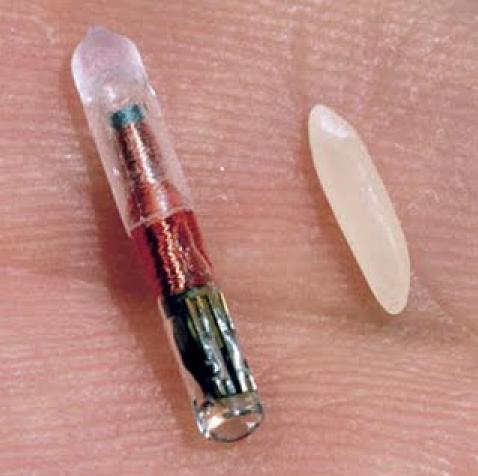
The procedure itself is simple – a tiny chip the size of a grain of rice is inserted under the skin at the back of your pet’s neck. Each chip contains a unique 15-digit reference number that is stored with your contact details in a central database, permanently linking your pet to you.

Pet Id-chips are not much bigger than a grain of rice...and getting smaller all the time!

Pet Id-chips are not much bigger than a grain of rice…and getting smaller all the time!

This does of course mean that it is imperative that you keep any change of address or contact numbers up to date, so don’t forget to register new details when you move house or get a new mobile or email address!

Any lost or stray animals are scanned routinely when they are picked up by vets, charities or local authorities; with one quick phone call you will soon be re-united with your beloved.

And the cost of the procedure itself is relatively low (average prices are around £20-£40 for the initial chip insertion) – we think that this is a small price to pay for the peace of mind that microchipping brings.

You can find more information from the UK’s biggest microchipping service, PetLog.


Microchipping your pets is important

Please note: The Ralph Site is not affiliated with any of the organisations detailed here, and the views, ideas and suggestions expressed in this and other blogs are simply shared with the intention of helping you, our friends, take care of the special animals in your lives.

Pet Loss: When You Need Somebody to Lean On…

Pet loss support

Those of us who have shared our lives with a much-loved animal friend carry the experience with us forever. Just as we can find joy in the memories of happy times shared together, the pain of saying goodbye is also indelibly stamped on our hearts.

Sometimes the visceral pain of our grief is almost too much to bear, and at times like this it can be helpful to speak with someone who understands. You may have sympathetic friends or family who have lost their own pets, and talking over how you feel with them will provide some small comfort.

However, if you feel there is nobody you can share your thoughts and feelings with, at The Ralph Site we want to help.

You can get support from our open public Facebook page; you can ask to join our closed private Facebook group.

For United Kingdom residents, we have also put together a list of experienced Pet Bereavement Counsellors from across the country.
(Please note that whilst we provide details for your convenience, we are unable to directly endorse or recommend these individual services, and you may also wish to research other alternatives to suit your own preferences and requirements.)

In addition, there is plenty of support and advice to be found in the Counselling Directory, the UK’s largest database of registered professional counsellors. Here you’ll find answers to any questions you may have about how counselling works, and which type of approach might be best for you.counselling

Please don’t ever feel that you should be able to cope on your own; there is no need to suffer in silence. Each of us needs someone to share our thoughts and feelings with sometimes, and without acknowledging and expressing the pain we feel we may simply be storing up future problems. As many as 1 in 4 people will experience some kind of diagnosable mental distress during their lifetime, and bereavement is widely acknowledged to be one of the most traumatic times.

Well-meaning friends may tell you that “it’s only a dog” and encourage you to get another one – not everyone understands the deep bond that we form with our pets. You will know when, indeed if, the time is right to bring another animal into your life, and it will never be to replace an old friend, rather to make a new one.

Happy Chinese New Year!

Thursday 19th of February marks the beginning of the Chinese Year of the Goat – the eighth in a twelve-year cycle of animals representing the Chinese zodiac. The zodiac features a wide range of creatures; great and small, living and mythical, domesticated and wild:

  • Rat
  • Ox
  • Tiger
  • Rabbit
  • Dragon
  • Snake
  • Horse
  • Goat
  • Monkey
  • Rooster
  • Dog
  • Pig

The beginning of each New Year is on the first day of the first month of the Chinese lunar calendar, and therefore the date varies each spring, according to the cycles of the moon.

Chinese astrologists believe that those born under the sign of the goat are thought to be peace loving, kind and popular, but that they can also be prone to being clingy and resistant to change! Make of that what you will, all you goats out there!

Happy Chinese New Year! (Feb 19th 2015)

Defra statistics find that there are roughly 88,000 actual goats in the UK, half of which are adult breeding animals. In England and Wales there are thought to be around 30,000 producing milk. Whilst caring for a goat requires a bit more knowledge and commitment than your average cat or dog, they do make interesting and entertaining pets; their curious and friendly nature making them wonderful companions for anyone prepared to give goats the attention they need.

A number of goat rescue sanctuaries can be found across the UK, probably the largest is Kent-based Buttercups. They are always looking for foster carers to help ease the pressure on resources – if you think you might like to find out more and perhaps get involved, there’s plenty of information on their website.

And if you are considering taking on a rescue animal, or indeed looking to welcome any goats into your life, you can find much more information on goat welfare and husbandry from the RSPCA here and from the British Goat Society here.

But until next time, “Happy Year of the Goat!”

Love is a four-legged friend!

Ralph Site Shop blog post Pinterest (1)

Or a three-legged friend…or a two-legged friend…or a feathered winged friend…or a scaly friend etc.!

It can’t have escaped anyone’s notice that Valentine’s Day is almost upon us. Popular the world over (especially with card manufacturers and florists!), the 14th of February has come to symbolise the expression of romantic love. First associated with an early Christian Saint Valentinus of Rome, who is believed to have been imprisoned for carrying out wedding ceremonies for soldiers forbidden to marry, it was not until medieval times that Valentine’s Day really became popular.

Recent years have seen the increasing availability of cards for pets, no surprise given that most of us with pets in our lives will happily admit to being head-over-heels in love with them! The love we get from our pets is unconditional – a truly special thing in our modern, and often impersonal, world. They ask nothing from us and yet we’re happy to give so much – space on the best sofa, a favourite jumper to sleep with, and most precious of all, our time.

And whilst we don’t have to spend money to show someone that we care, because we also know that sometimes we all like to give a token of our love as a gift, here are our favourite treats for the one you love this Valentine’s Day, each costing just a few pounds:

  • Chocolate always goes down well, but don’t be tempted to share your own, it is toxic to pets. Instead, why not try this inexpensive treat
  • Give your heart away to your small animal friends, with these tasty treats
  • Perfumes and smellies are another popular choice for the lady in your life – your feline friend will love you forever if you treat her to these
  • Or how about a stylish accessory to brighten up the cold February days?
  • And then there’s perhaps the ultimate Valentine’s gift, a ring

However you are celebrating, and who ever you are spending it with, we wish you and your loved ones a very happy Valentine’s Day!

Until next time,
With very best wishes from Shailen and The Ralph Site team

Amazing Animals at Work: We Thank You!

As pet lovers, we know just how special our four-legged friends are, and have each felt first hand the joy they bring. Of course, some special dogs and cats don’t just enrich their carers’ lives, they quite literally make them worth living, and so this week we’re celebrating the fantastic work done by these amazing animals.

Dogs for the Disabled

Established in 1986, the charity trains and supports assistance dogs for physically disabled adults and children. A more recent development is the PAWS scheme, helping children with autism flourish with the love and companionship of a well-trained family pet.

Hounds for Heroes

This brilliant organisation provides specially trained assistance dogs to injured and disabled men and women of both the UK Armed Forces and Emergency Services. The dogs not only boost their owner’s quality of life by opening doors, picking up items, getting money from ATMs, and so on, but they also supply invaluable companionship and love.

Canine Partners

Between 60 and 70 dogs are placed by the charity every year, each one costing £20,000 to train and support through his or her working life. The training process takes around eighteen months and dogs then remain with their human for as long as both still benefit from the partnership.

TheraPaws from The Mayhew

This wonderful service provided by The Mayhew Animal Home sees volunteers taking animals into care homes, so that elderly residents can enjoy the companionship of a dog or kitten. Touch is one of the last senses to be affected for those suffering with Alzheimer’s and such interactions can therefore be very therapeutic – visits have been shown to reduce depression and lessen the social withdrawal that is often associated with the disease.

(Full disclosure: I am a trustee for The Mayhew!)

Pets as Therapy

There are currently 4,500 active PAT (Pets As Therapy) Dogs, and a smaller number of PAT Cats working throughout the UK. The animals visit hospitals, hospices, nursing and care homes and special needs schools, where they play a key role in the charity’s Read2Dogs programme, boosting literacy and confidence. The ‘Stroke and PAT’ project works with patients recovering from strokes, helping with therapy and rehabilitation.

Each of these wonderful organisations is funded by charitable donations, and any or all of them would be grateful for any help you might be able to give. Donating a sum (no matter how small), or setting up a regular contribution, can be a lovely way to make a real difference to someone’s life, whilst honouring the memory of a much-loved family pet.

Until next time,
With very best wishes from Shailen and The Ralph Site team

Pets as Therapy