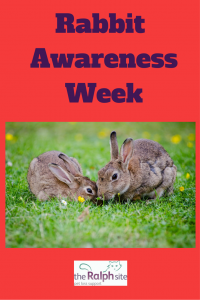
Rabbit Awareness Week

Those of you with rabbits will no doubt already know that Saturday June 18th marked the start of Rabbit Awareness Week – an annual focus that runs until June 26th, covering all things leporine. Rabbit Awareness Week was established ten years ago by coalition of experts, organisations and welfare charities from the rabbit community, to educate old and young alike on the best ways to provide domesticated rabbits with happiness and health. You can find out more about the many aspects of RAW’s work here.

To mark the occasion, hundreds of vets, rescue centres and pet stores across the UK are holding special events; ranging from free health checks to food sampling and rabbit education workshops. 602 events across the UK have been registered on RAW’s website for 2016, so why not take a look at what’s happening near where you live here.

The RAW focus for this year is ‘#BuddiesforBunnies’ – just like us humans, rabbits are naturally social animals, which means that companionship is crucial for their wellbeing. Unfortunately, research finds that in stark contrast to this, 57% of the UK’s pet rabbits live alone. RAW 2016 aims to inspire pet carers to take on a suitable friend for their single rabbit by encouraging them to re-home a rabbit from a local welfare centre.

And there are certainly plenty of rabbits waiting for a new forever home – sadly over 67,000 rabbits are given up for adoption in the UK every year. So if your rabbit currently lives alone, please do consider finding him or her a new friend – not only will you improve your pet’s life, but you’ll be able to bring companionship to a local bunny who is currently housed with a rescue charity or welfare organisation – everybody wins!

Rabbit awareness week pinterest
There are some important things to remember when introducing a new rabbit to your current pet, and the RSPCA has an excellent factsheet  on the topic:

  •  Provided both animals are neutered, a male and a female will live together quite happily. Single-sex pairings are also common
  • As prey animals, rabbits are naturally cautious and territorial, and so the two animals should meet in a neutral environment for the first time – not in your current pet’s hutch or run for example
  • Ideally, choose a large space with plenty of distractions (food, toys, hiding places)
  •  Introduce the two animals into the meeting area at the same time. The rabbits may ignore each other initially, or may watch carefully from a safe distance. If they begin to fight, separate the two and try again the next day. Keep persevering until the two rabbits bond
  • At this stage it helps to position the two separate hutches facing each other so that the rabbits can get used to each other when they are not yet living in the same space
  •  Once the pair sit together and groom each other, you’ll know that they have successfully bonded. In almost all cases they will remain friends for life!

Aside from the #BuddiesforBunnies campaign, RAW also works to educate those with rabbits in their lives on the optimum conditions for pet rabbits. You can find lots of advice on diet, housing, behaviour and health issues on RAW’s website, as well as here.

Until next time, best wishes from Shailen and The Ralph Site team
The Ralph Site, non-profit pet loss support 

Please note: The Ralph Site is not affiliated with the third-party organisations in any of the links shared here, and the views, ideas and suggestions expressed in this and other blogs are simply shared with the intention of helping you, our friends, take care of the special animals in your lives.
Focus on … Flea and worm treatment

Now that the weather is warming up, many common parasites such as fleas and worms become more active. Fortunately there are plenty of highly effective products available, in a range of different application methods, so you’re sure to find one that suits you, your pet and your purse.

Fleas

If you see your pet scratching excessively, notice small scabs and spots on his / her skin, or find small brown specks of flea dirt in the fur (particularly round the bottom), then you may have a flea problem. Aside from causing irritation, if left untreated fleas can also cause a number of related health problems for your pet:

  •  Hair loss resulting from intense itching and scratching
  •  Flea Allergy Dermatitis – a very common and unpleasant skin condition caused by an allergic reaction to flea saliva
  • Tapeworm infestation
  •  Anaemia in puppies and kittens

Fleas live and feed on pets – females lay their eggs on the host animal and multiply fast: each female flea can lay 50 eggs a day so in only three weeks one flea can become 1,000! However, killing the fleas and eggs on your pet is only half the problem, and no treatment can prevent a re-infestation. Some of the eggs and flea larvae will drop off into your pet’s bed or favourite resting spot and wait for a passing host. That’s why it’s important to treat your home with a thorough vacuuming, followed by the application of specially formulated flea spray, in addition to treating your pet.

And whilst fleas are certainly more active during the summer months, they are present all year round, so we recommend regular treatment of all pets living in the household, treated at the same time with a product of your choice: tablets, spot-ons and so on.

Focus on ... Flea and worm treatment pinterest

Worms

Rabbits and smaller pets do not tend to suffer with worms, whilst the most common in cats and dogs are:

Roundworms

Looking like strings of spaghetti or elastic bands, they are picked up from the environment, as well as being passed from animal to animal, and possibly on to the two-legged members of the household! Roundworm eggs are almost invisible to the human eye, so can be difficult to spot.

Tapeworms

You may find segments of these worms excreted in your pet’s faeces (they look like flattened grains of rice). An intermediate host, such as a passing flea, is required to transmit tapeworms; therefore it is advisable to treat your pet against both worms and fleas.

As with fleas, no worm control will prevent re-infestation as these products only kill worms already present rather than providing protection against future problems. Therefore it is recommended that you treat your pet regularly, especially if he or she hunts or scavenges.

And don’t forget, if you need further advice on any aspect of parasite control, your vet will be only too happy to recommend solutions that suit your pet’s lifestyle. We would recommend products from your veterinary practice as they are typically the safest, if sometimes more expensive, options.

Until next time, best wishes from Shailen and The Ralph Site team
The Ralph Site, non-profit pet loss support

Please note: The Ralph Site is not affiliated with the third-party organisations in any of the links shared here, and the views, ideas and suggestions expressed in this and other blogs are simply shared with the intention of helping you, our friends, take care of the special animals in your lives.

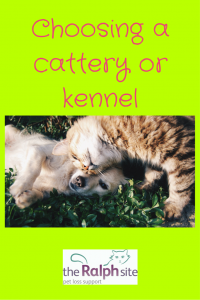
Choosing a cattery or kennel

As much-loved members of the family, pets would ideally accompany us on our holidays. Of course, this is not always possible and most of us will therefore require the services of a boarding service for our pets at some point. This week we take a look at some of the practical considerations involved in choosing a cattery, kennel or pet hotel.

Choosing a cattery or kennel pinterest

In the UK, the local Council must license all boarding establishments for pets and a valid licence must be on display. An annual inspection ensures that kennels comply with current regulations relating to pen size, hygiene, feeding and general standards of care – however, it’s worth bearing in mind that the requirement is only for a kennel or cattery to meet minimum standards of care. You will therefore want to visit and compare several different options in order to reassure yourself that your pet will be well cared for in your chosen kennel or cattery – it’s a good idea to visit unannounced during normal working hours so you can get a feel for how the place is run.

On your visit, ask lots of questions and look closely at the pens – it’s important that you feel comfortable leaving your pet in the care of the people that you meet. Subjects you may wish to cover might include:

  • Does the building look well maintained and secure?
  •  How many staff are on site, and how much time do they spend daily with each guest?
  •  How often will you be updated about your pet whilst you are away?
  • Are the pens clean and draught-free?
  •  Is the sleeping area heated in winter / air-conditioned in summer?
  • What arrangements are in place for pets to exercise?
  •  Do the pets staying at the time of your visit look content and well fed?
  • If your pet requires medication or a special diet, how is this managed?
  •  What is the procedure for providing veterinary care, if required?

Reputable establishments will insist on all residents being up to date with their vaccinations, so expect to be asked for your pet’s current vaccination record. If you are not asked about this, the chances are that other guests have not been vaccinated either, and there is a risk that disease and infection may be transmitted between residents. We believe that using a cattery or kennel where these standards are not enforced is simply not worth the potential risk to your pet’s health.

Those of you with small furries may find a good pet hotel in your area that can take good care of your rabbit, guinea pig, hamster or gerbil whilst you’re away. The same recommendations apply, in terms of visiting to see for yourself that conditions are clean and the place is well run. If you are planning to board rabbits, you should ensure that your pets’ VHD and myxomatosis vaccinations are up to date, and the boarding hotel should always ask to see the certificate. Most smaller pet boarding establishments house rabbits and guinea pigs in the hutches provided on site, whilst smaller rodents would be housed in their own cage, minimising their disruption and stress.

Ultimately, as with most things, the best way to find trusted pet care services is through recommendation – ask your family, friends, social media contacts and fellow dog-walkers which local places they use. Search online for kennels and catteries in your area and check their reviews. If they have a Facebook page you will be able to get a good feel for their approach, as well as reading feedback from clients.
You might find Find Pet Boarding a helpful place to start.

Until next time, best wishes from Shailen and The Ralph Site team
The Ralph Site, non-profit pet loss support

Please note: The Ralph Site is not affiliated with the third-party organisations in any of the links shared here, and the views, ideas and suggestions expressed in this and other blogs are simply shared with the intention of helping you, our friends, take care of the special animals in your lives.
Harvey’s Law

Back in March, parliament debated changing the law to ensure that a standard procedure is followed when pets are hit by vehicles on UK roads. Under our constitution, all petitions with over 100,00 signatures must be debated at Westminster, and the call for Harvey’s Law attracted widespread support and media coverage at the time, resulting in 123,307 signatures.

Judy Devine’s pet poodle Harvey had run away after slipping his lead whilst visiting friends in Liverpool. Judy spent over £8,000 in subsequent weeks printing and distributing missing pet posters around the city; regularly travelling from her home city of Sheffield to search for him and raise awareness. Four months later she was told that his body had been found by the M62; heartbreakingly just twenty minutes after he had gone missing. Judy was determined that others should be spared the lengthy worry and uncertainty that she had endured, and so the campaign for a change in the law was launched.                                                                    Harvey's Law pinterest

The Harvey’s Law petition requested new legislation to ensure:

  •  Compulsory scanning of all domestic animals retrieved from the highways
  •  Reports to be filed and circulated to both Police and Dog Warden
  • Photographs of the deceased pet to be held with the log report to be used for identification purposes

Until recently, highway workers were obliged to scan any pet found by the roadside in order to check for a microchip, and then contact the registered owner to inform them of the facts and make arrangement for the return of the body. However, as part of the government’s austerity measures, this mandatory scanning is being phased out.

Debating the petition, Transport Minister John Hayes said it was ‘absolutely essential’ that every possible measure was taken to identify domestic animals killed in road accidents and contact their owners. He told MPs: “I have therefore asked the Highways Agency to ensure that indeed they do collect and identify every animal that is killed and contact the owners by whatever practicable means” but stopped short of announcing any changes to the law.

http://www.bbc.co.uk/news/uk-england-31691393

Sadly this upsetting scenario may be very familiar to friends of The Ralph Site – our public Facebook page and private group page often feature similar stories. Aside from the obvious pain that the pet’s loss itself brings, the limbo of not knowing a pet’s fate and living half in hope that one day you may be reunited with a missing friend can be almost unbearable. Ensuring that your pet is microchipped at least makes identification possible should your pet be involved in a road accident – losing a beloved pet in this traumatic way is sadly very close to our hearts here at The Ralph Site. It was after the loss of Ralph in November 2010, who was microchipped, that our community was created; honouring all the animals that have touched the hearts of so many people and helping their carers through the dark times.

If you can relate to the stories of Harvey and Ralph, and you’d like emotional support and practical help in coming to terms with your feelings, our sister site features plenty of useful resources: The Ralph Site

You are never alone, and we wish you well.

Until next time, best wishes from Shailen and The Ralph Site team

The Ralph Site, non-profit pet loss support

Please note: The Ralph Site is not affiliated with the third-party organisations in any of the links shared here, and the views, ideas and suggestions expressed in this and other blogs are simply shared with the intention of helping you, our friends, take care of the special animals in your lives.

Animals in the news

As true animal lovers know, respecting the natural instincts and needs of animals is an essential basis for enjoying a positive relationship that benefits both human and animal. In this light, research published this week highlighting the number of wild animals living in UK properties makes for uncomfortable reading.

Following a freedom of information request to every council in the UK by the Press Association, a clearer picture has emerged of the numbers of wild animals being kept privately, outside those housed by zoos and welfare organisations:

  • More than 100 councils have issued licenses for predatory animals
  •  Big cats are being kept in several locations; with thirteen tigers, two lions, eight leopards, seven cheetahs and nine pumas all legally registered
  • Fifteen wolves are registered to addresses in the UK
  • Over 300 cobras, vipers and rattlesnakes are licensed
  •  Ten alligators, nine crocodiles and seventeen caimans are living in approved domestic residences
  • 412 bison and more than 2,000 wild boar are living in private fields around the UK, whilst the research also highlights a small zebra population

Animals in the news pinterest
Dangerous Wild Animals (DWA) licences are granted to allow UK residents to keep undomesticated animals as pets, providing they follow a series of safety measures and pay a small fee. Not surprisingly, the RSPCA has voiced its concerns about the findings:

“We are deeply concerned about the number of exotic animals, including dangerous wild animals, now being kept as pets. People may buy them with little idea of how difficult they can be to keep and the animals are sometimes neglected when the novelty wears off and the commitment hits home. This is why we would encourage anyone thinking of getting an exotic pet to find out as much as possible about the animal’s needs and whether they are a realistic pet.
Licences for exotic animals classed as dangerous wild animals are granted by local authorities and the details are also held locally. There is no centrally held list to determine how many are kept across the country. The emphasis of this legislation is on making sure the owner takes reasonable steps to prevent the animal from being a threat to the public, rather than the welfare of the animals concerned.”
Above is from Sky News.

Western Diamondback Rattlesnake (Crotalus atrox) coiled to strike

A happier news story reported in recent days concerns Eddie, the Yorkshire terrier from Stockport who, after going missing for five years, has now been reunited with his owners following a routine veterinary check-up. Eddie was being looked after by relatives whilst the Wright family were away on holiday, but when he escaped from the garden an extensive local search failed to find him and the devastated family thought they had lost him forever. It seems that Eddie was taken in by a lady in the area who cared for him in the intervening period, until very recently she became unable to care for him and Eddie went to live with a neighbour. Now aged thirteen, Eddie was taken to the vet for a routine check-up by his new care, where a microchip check registered him as missing. The Wright family had kept their contact details up to date with the microchip database and so they were soon contacted with the good news.

Sandra Wright told reporters: “Best of all, he arrived home on my daughter’s 16th birthday. I printed off one of Eddie’s ‘missing’ posters from the computer for when she arrived home from school, then when she came in and saw Eddie next to it she was over the moon and said it was the best birthday present ever!”
Above is from the Guardian online.

We do love a story with a happy ending! And it just goes to show how important it is both to microchip your pets and also to keep your contact details up-to-date in case the unthinkable should happen.

Until next time, best wishes from Shailen and The Ralph Site team
The Ralph Site, non-profit pet loss support 

Please note: The Ralph Site is not affiliated with the third-party organisations in any of the links shared here, and the views, ideas and suggestions expressed in this and other blogs are simply shared with the intention of helping you, our friends, take care of the special animals in your lives.