Category Archives: Blog

Welcome to our blog!

Each week we will post blog pieces relating to pet bereavement and other animal-related topics. We hope you enjoy the blog and please share your thoughts and comments – we would love to hear from you!

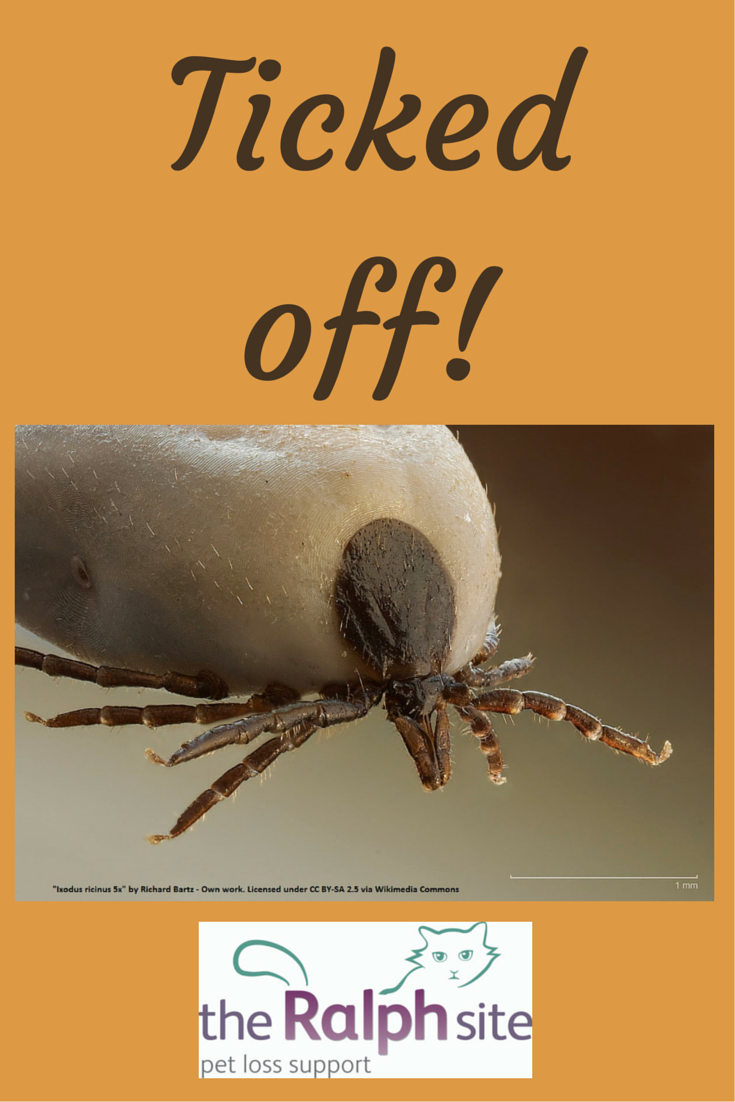
Ticked off! Ticks in dogs and cats…

Now that summer is here, it’s possible that a walk in the countryside might end with either you or your pet becoming a little too well acquainted with ticks. This week we look at these pesky parasites, and share some tips as to what to do should you encounter them.

What are ticks?

More than 20 species of ticks can be found in the UK, commonly using wildlife and livestock as their unwilling hosts. However, as ticks are attracted by the body heat and chemical traces from the breath and body odour of mammals, it is not uncommon for them to attach to any passing dogs, cats or horses (as well as to us humans!)

Ticks feed on the blood of mammals, but as they cannot fly or jump, they climb up long grasses and vegetation and simply wait for a passing meal. Before feeding, ticks are just a couple of millimetres long, and are usually a reddish dark brown or black colour. It is very difficult to spot them at this stage, and it might not be until they have swollen to a much greater size following a couple of days’ feeding, that you notice them on your pet.

Why are they a problem?

Apart from being unpleasant, ticks carry a range of diseases (Bartonellosis, Anaplasmosis, Ehrlichiosis, Babesiosis and Borreliosis – better known as Lyme Disease), each of which can cause a range of potentially very serious symptoms in cats, dogs and horses. Not all of these diseases are found in all countries; for example they are rare in the UK but much more common in USA. A preventative vaccination has recently been developed for use in dogs, and your vet can give you more information on this.

Ticks in dogs and cats

Removing ticks safely

Most of us have heard horror stories about ticks: they can leave their head attached unless removed correctly, they can burrow into the skin or lay eggs in their host. These are all myths! But whilst ticks do not have heads, it is also true that unless removed carefully with the correct tools, their mouthparts can be left behind, causing an infection risk. Using your fingers to twist or pull a tick off your pet, or smothering it in petroleum jelly to suffocate it, can also do more harm than good, as the tick may regurgitate saliva back into its host, again posing an infection risk.

There are only two ways to safely remove a tick: using either fine-tipped tweezers or a special tick-removing tool such as the O’Tom Tick Twister.

  1. Grasp the tick as close to the skin as possible and gently pull upwards
  2. Do not twist or jerk the tick as this may leave its mouth parts embedded
  3. Do not squeeze or crush the body of the tick (hence why flat-ended tweezers are unsuitable)
  4. Do not handle the tick with bare hands, and avoid touching your eyes, nostrils or mouth
  5. Disinfect the bite site with an antiseptic wipe or wound wash and wash your hands thoroughly with soap and water.

Of course, your veterinary practice will be very happy to help you out if the whole prospect of tick removal makes you feel queasy!

Much more information on ticks and the diseases they carry can be found HERE.

Consult your vet practice for advice and guidance on preventing and treating tick infestation.

Until next time, very best wishes.

Shailen

The Ralph Site, non-profit pet loss support

Please note: The Ralph Site is not affiliated with the third-party organisations in any of the links shared here, and the views, ideas and suggestions expressed in this and other blogs are simply shared with the intention of helping you, our friends, take care of the special animals in your lives.

Choosing a Kennel or Cattery

Making the decision to leave your beloved cat or dog behind when you go away on holiday can be hard. However, as well as the option to use a friend, family member or professional pet sitter, there are many excellent catteries and kennels available where your pet will be very well taken care of.

It’s important that you feel comfortable with your choice, and therefore it’s always a good idea to ask around – have friends and family used anywhere local that they would recommend? Go and visit a couple of places so that you can compare the options on your shortlist – reputable businesses will happily accommodate your request for a tour and answer any questions you may have.

Here are some practical considerations you may wish to think about when deciding which cattery or kennel to choose:

  • Are the pens clean, draught-free, safe and secure?
  • Is there a covered outside run where your pet can exercise and get some fresh air and sit in the sun?
  • Avoid any establishment that features a communal exercise area – these are almost guaranteed to spread diseases and parasites
  • Reputable catteries and kennels will ask to see your up-to-date vaccination certificate. It’s always advisable that your pet is protected by the vaccinations recommended by your vet, and this is never more important that when they are in the company of unfamiliar animals
  • Equally, you should ensure that your pet’s flea and worm protection is up to date prior to leaving him or her
  • Cats can find the presence of unfamiliar dogs stressful, and therefore cat owners may wish to choose a cattery rather than a boarding kennel which looks after both cats and dogs
  • Are you able to specify that your pet is fed the diet that he or she is used to, and be treated by your own vet in the unlikely event of an emergency whilst you are away? Good catteries and kennels will always accommodate your requests, assuring you of maximum peace of mind
  • Do the cats and dogs that are boarding at the time of your visit look relaxed and happy?
  • Ask to see valid insurance certificates and operating licences

Catteries and kennels are inspected by the local authority in order to be granted a licence – your local council should therefore be able to give you details of approved businesses in your area.

Choosing a kennel or cattery

Helpful UK sites for cat owners:

Helpful UK sites for dog owners:

Until next time, very best wishes.

Shailen

The Ralph Site

Please note: The Ralph Site is not affiliated with the third-party organisations in any of the links shared here, and the views, ideas and suggestions expressed in this and other blogs are simply shared with the intention of helping you, our friends, take care of the special animals in your lives.

It’s always good to talk, and it’s great to give something back

Losing a pet is such a personal experience that sometimes it can seem impossible to share your thoughts and feelings with others. Sadly we all know that there is no magic word that anyone can say to make the pain go away, but it’s so true that the simple act of talking about your experience can often take away some of the hurt. You might have a partner, family member or close friend who you can confide in. Or you may prefer to speak to someone you don’t know; which is where the Pet Bereavement Support Service (PBSS) can help.

  • Telephone support is provided by trained PBSS volunteers who offer emotional support and information without judgement or bias.
  • UK callers can access the support line on 0800 096 6606 and it is open from 8.30am – 8.30pm everyday.
  • All calls are free and confidential from a landline, although if you are calling from a mobile phone, please be aware that some phone networks may charge.
  • Alternatively, if you find it easier to put your feelings in writing, you can also email the Pet Bereavement Support Service on pbssmail@bluecross.org.uk and they will reply within 48 hours.

More information is available on the charity’s website.

Many of the volunteers working on the PBSS helpline do so because they wanted to share their own experiences of pet loss and give something back to the charity that helped them. Volunteering has proved to be a cathartic experience for many, and perhaps in time you might wish to consider doing the same? More information about the service can be found in the free 30-minute webinar available to view here.

Pet loss grief support

A relatively new organisation is ALLY®, a community-based support service for people experiencing the loss of their companion animal. From their base in the SW of England they are gradually expanding their network across the UK, and training opportunities are available for anyone wishing to become an accredited supporter and help others currently going through the loss they have themselves experienced.

Just remember that however you may be feeling, you are not alone. Countless others are going through the same painful experience, whilst many more have come through it with the help and support not only of friends and families, but also of strangers on the phone. Sometimes help is only a phone call away.

Until next time, very best wishes.

Shailen
The Ralph Site, non-profit pet loss support

Please note: The Ralph Site is not affiliated with the third-party organisations in any of the links shared here, and the views, ideas and suggestions expressed in this and other blogs are simply shared with the intention of helping you, our friends, take care of the special animals in your lives.
Just Look At Them Go!

Last weekend saw the 2015 World Agility Championships take place in Ermelo, The Netherlands.

This year, 387 dogs from 32 countries took part in a series of agility events designed to showcase the amazing athletic abilities of our canine friends and celebrate the partnership, mutual respect and deep understanding that exists between dogs and humans.

Agility sport is becoming more popular throughout the UK, providing a fun environment for dogs to display their natural strength and fitness, whilst acknowledging the handler’s ability to train and direct the dog over and through a series of obstacles in the fastest time, with the least number of mistakes! There are agility clubs and competitions across the UK, each adhering to strict rules of conduct to ensure that the health and welfare of the dog is forefront at all times. As well as providing the dog with the opportunity to run around at top speed, agility clubs also offer a supportive and fun social scene for you. If you’d like to find out more about the world of agility, or contact clubs and organisations in your area, you can search for local clubs here.

Dog agility

The great thing about agility sport is that dogs of all shapes, ages and sizes can enjoy it. Don’t be put off by the Crufts approach, which can be very regimented and serious – if that’s not for you and your dog, you’ll be pleased to know that a number of organisations run agility events more geared towards fun than competition, with classes for young, old or recovering dogs, and fewer rules and regulations for their handlers! You can find out more about these at sites as these:

UK Agility
The Agility Club
British Agility Association

But be warned – agility can be addictive! There’s no doubt that the dogs taking part love it, and there’s every chance that you will very quickly come to love the buzz of it too! Seeing your faithful friend taking a new course in his or her stride, watching intently for your signal to start and sharing a huge hug at the end of a successful round will fill you with pride and joy. You already know that your partnership is special, and your dog is talented and clever – agility allows others to see that too. What’s not to like?!

Until next time, very best wishes.

Shailen
The Ralph Site

Please note: The Ralph Site is not affiliated with the third-party organisations in any of the links shared here, and the views, ideas and suggestions expressed in this and other blogs are simply shared with the intention of helping you, our friends, take care of the special animals in your lives.

Keeping Indoor Pets Happy and Healthy

We all understand the simple pleasures of sharing our homes and our hearts with animals. Coming home after a long day at work to be welcomed by a feline friend weaving around our legs, purring in delight, wipes out the day’s stresses in an instant. The sight of a wagging tail at the window as we pull into the drive, of a rabbit stretching languidly in a pool of sunlight fanned across the living room floor – these are the simple pleasures that pets bring.

Your pets may live indoors permanently (leaving aside those essential, and always enjoyable(!) trips to the vets as required). In some cases this is through your choice, in others it is out of necessity. There is debate about the pros and cons, rights and wrongs, and to an extent it depends on the species and individual animal in question.

Tips on keeping indoor pets happy and healthy.

Regardless, if you share your home with an indoor pet, it is essential to do what you can to keep him/her happy and healthy. We have put together some top tips for anyone with a house rabbit, cat or dog, which we hope you will find useful:

Rabbits

  • Keeping rabbits indoors means that you and your family get to interact with them much more. There’s also the added advantage of keeping him or her safe from predators.
  • Rabbits can be litter trained, and you will find that this is easier if they have been neutered.
  • Neutering your house rabbit will also reduce spraying and territory marking.
  • Provide a safe and secure place where your rabbit can sleep and rest. You may choose a hutch or cage with the door left open so that your rabbit can come and go, otherwise a box or designated corner of a room with plenty of clean hay is just fine too
  • Bunny-proof your home! Rabbits will naturally chew and dig, so keep electrical cables out of reach and provide a tray or box filled with hay for them to scratch about in
  • Rabbits are sociable animals and company is recommended. Another rabbit is best, but rabbits will also tolerate cats and well-behaved dogs

You can also find lots more advice and information on keeping rabbits indoors for example at this and this site.

Cats

  • Adapting to life indoors is easier if it is the norm from kittenhood – it is not really fair to keep a cat inside if he or she has previously been used to exploring the great outdoors
  • Consider providing a feline friend for company, especially if you are out during the day
  • Keep the litter tray clean and emptied regularly – cats are fastidious creatures and will typically not use a dirty tray – at least not happily. Always provide separate feeding and water bowls if you have more than one cat, along with one more tray than the number of cats (so three trays for two cats)
  • Provide plenty of stimulation – lots of toys, scratching posts and access to a variety of places for cats to explore and rest
  • Monitor your pet’s weight – indoor cats can be prone to weight gain
  • Keep your cat’s vaccinations up to date. Many viruses and diseases can be spread on our shoes and passed on by other pets who may go outside. Moreover you never know when you might need to put your cat in a cattery unexpectedly.

You can find lots more advice and information on keeping cats indoors at the Your Cat and RSPCA websites.

Dogs

  • Many people believe that dogs should not live solely indoors. However, with careful consideration of practicalities such as your own lifestyle and the size of your house, as well as the size and condition of your dog, it is possible for dogs to live happily indoors.
  • Clearly there is a huge benefit to an indoor dog being small – the amount of exercise and stimulation needed for larger pets to thrive is very difficult to achieve without regular access to the outdoors.
  • **It is recommended that indoor dogs are still taken out for regular walks.**
  • Scatter-feed dry food and treats in order to provide stimulation and exercise. Hide food around the house and use activity feeders to keep your dog’s mind active. There are several in our shop, along with treats and pastes to go inside.
  • Provide a safe place for your dog to rest that he or she knows is only for him/her. Crate training your puppy from the start will help your adult dog feel comfortable and behave well indoors. There is much more detail on this positive training technique on the RSPCA’s website – search for ‘crate training’

As mentioned, keeping pets entirely indoors is contentious and some people feel very strongly one way or the other. If your pet is indoors then with planning and patience, indoor pets can live alongside you and your family, making your house truly feel like a home.

Until next time best wishes,

Shailen

The Ralph Site

Please note: The Ralph Site is not affiliated with the third-party organisations in any of the links shared here, and the views, ideas and suggestions expressed in this and other blogs are simply shared with the intention of trying to help you, our friends, take care of the special animals in your lives.