After a pet dies, we’re faced with the decision about what to do with their belongings. You’re likely to fall in one of three camps. In camp one are the people who throw out, give away or pack up their pet’s belongings immediately. In camp two are the people who can’t bear to move a single thing. Camp three sits somewhere in the middle.
Out of sight, out of mind?
As we’ve said time and again, there is no right or wrong way to grieve.
For some people, coming home to an empty bed, an unruffled blanket, a silent cage, toys that are no longer played with, is too distressing. Every item is a reminder that the animal who loved them is gone.
It’s completely understandable that the people in this camp decide to pack everything away straight away. It isn’t that they want to forget their pet, just that they can’t face the daily reminders of what has been lost.
Some words of caution, if this is your immediate reaction to your loss, is to take a moment to breathe and avoid getting rid of everything while you’re immersed in the first hours and days of grief.
There may be a time, weeks or months from now when you want something tangible to remind you of your lost friend. Many people eventually find comfort from being able to touch a favourite toy, a well-worn collar, a special blanket because of the memories associated with the item.
If it’s too painful to see your pet’s things around the house, could you pack them away for now to be revisited when your pain is less raw?
As though they’re just in another room
In Henry Scott Holland’s poignant poem, Death is nothing at all, the narrator tells us to think of death as though “I have only slipped away to the next room”.
Many pet carers find it unbearable to move their companion’s belongings, preferring instead to keep things as they last were when their friend was alive.
Maybe your house right now feels as though your pet has just slipped away to the next room and may come back at any time.
People often feel that they can’t clear their pet’s belongings away. They worry that it’s a betrayal or that, if the pet knew, they would feel disposable.
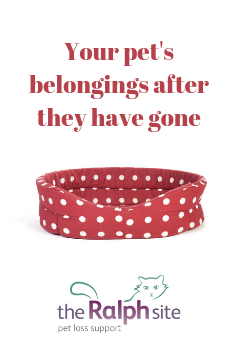
In some homes, water bowls remain untouched until the last drop evaporates; favourite blankets stay on the sofa, a collar and lead hang by the door, toys lay waiting in the toy box.
If you sit in this camp, it’s important to remind yourself that grief is a journey rather than a place to stay. Some people find that constantly being surrounded by reminders of their loss keeps it current and taunts the mind with hopes that the parting is temporary.
How would it feel to pack a few things away in a special memory box or donate a few things to someone you know who has a pet who will enjoy them?
Again, there is no right or wrong, only what feels right for you.
When time is against you
We should recognise that one group of pet carers – those with horses – don’t always have a choice about clearing away their loved one’s belongings. It will depend on the livery yard where your horse was stabled and the terms of the contract you have with them.
Some livery yard owners recognise that bereaved horse carers need time to grieve and to decide whether they may want another horse a couple of months down the line. In this case, they may hold the stable for you. Whether you pay full price for this or not will again depend on your arrangement with the yard owner.
Other livery yard owners, especially if they have a waiting list, may not want a stable to sit empty. If you’re not ready for another horse, it’s understandable that the stable owner will want to fill it.
In this situation, you may be faced with packing away your horse’s belongings before you’ve even had time to take stock of your loss.
If this happens, do try to get a loved one to come with you to help with what may be an emotional experience. Perhaps you know someone at the same stables who can hold on to your horse tack for the time being?
A middle ground – keeping your pet’s most precious belongings
Eventually, most people find they sit in camp three when it comes to handling their pet’s belongings.
This usually means keeping some items that have special associations – a dog’s well-worn collar, a cat’s favourite blanket, a rabbit’s snuggle bed, a budgie’s hanging bell toy – but letting others go.
One option is to look out photos or videos of your pet enjoying their belongings. In time, this will be a source of joy and good times remembered.
You could also create a memory box of some of the items that evoke strong memories to be rediscovered for years to come.
There are no rules about what to do with your pet’s things. Whatever camp you fall into, the most important thing is that you’re kind to yourself and that you do what feels right for you.
If you’re struggling with any aspect of pet loss right now, The Ralph Site Facebook group offers a community of people who ‘get it’ and can offer a safe space to talk about your feelings. You can also find details of pet bereavement services on the main Ralph Site.
Until next time,
Shailen and The Ralph Site team
The Ralph Site, non-profit pet loss support


