Have you found yourself becoming more anxious about the health and safety of your animal companions since experiencing a bereavement? Perhaps you’re constantly watching for signs of illness, worrying about accidents or imagining how you’ll cope when the time comes to say goodbye again.
You may have noticed that things you once took in your stride now make you nervous. A dip in appetite, a cough or sneeze, a change in behaviour or even the thought of leaving your animal friend in someone else’s care might trigger a wave of anxiety.
We know, of course, that the animals we love won’t live forever, but there’s a difference between understanding this in theory and experiencing the reality of their death.
How do we live with this knowledge without letting it rob us of the joy of sharing our lives with animals?
When loss changes your sense of safety
Many of us go about our daily lives knowing that bad things can happen but with an unspoken assumption that they probably won’t happen to us. We’d find it very difficult to function otherwise.
Experiencing a bereavement can shake this assumption. If you’ve lost an animal companion to an unexpected illness or accident, for example, it’s no longer enough to tell yourself that the chances of something like this happening are slim. You know from experience that things sometimes go wrong.
Even when we expect a death, the experience of losing someone we love can make us much more conscious of mortality. You may find that you worry more about your parents, partner, children or friends, as well as the animals in your care.
When protecting them becomes a constant worry
As animal carers, we have a responsibility to protect the animals who depend on us. After a bereavement, however, we may feel this responsibility more keenly than ever.
If you lost an animal companion to an illness that developed rapidly, you might now check another animal’s breathing while they sleep, repeatedly examine them for lumps or weigh them more frequently than you used to.
Similarly, someone whose dog died in a road accident might become frightened of allowing another dog off the lead, even in places they previously considered safe.
Previous bereavements can leave us experiencing something known as hypervigilance, where we feel the need to stay on high alert for potential threats. This is quite a common reaction to bereavement.
Do you spend hours researching symptoms online? Do you get up several times a night to check on your animal companion or struggle to concentrate at work because you’re worried about them? Perhaps you’ve even stopped going on holiday because you can’t bear the thought of something happening in your absence.
Living in this state of heightened awareness can take an enormous toll on your physical and emotional wellbeing, particularly if you’ve been doing so for months or even years.
When you’ve experienced loss after loss
If you’ve cared for several animals over the years, particularly older animals or those with complex health needs, your fear of experiencing another bereavement may have grown with each loss.
Each bereavement brings its own grief, but it can also bring the pain of previous losses back to the surface.
Take a moment to acknowledge everything you’ve been through. You may have spent countless hours administering medication, attending veterinary appointments, researching symptoms and making difficult decisions. You’ve also experienced the heartbreak of losing animals despite your best efforts.
It’s understandable if your confidence has taken a dip. It’s a very human response to worry about missing something, making the right decisions, or coping with future losses. Your brain is trying to protect you.
Even when an animal is healthy, you might struggle to relax because experience has taught you how quickly that can change. This can be especially difficult if you care for animals who are susceptible to certain illnesses or whose previous experiences have left them with ongoing health problems.
Ironically, you may be a far more knowledgeable and experienced carer than you were ten years ago but have considerably less confidence in your abilities. The more you know about what can go wrong, the harder it can be to trust that things will go right.
You may even find yourself envying people who seem to care for their animals with the confidence and optimism you once had.
When fear starts to overshadow the joy
One of the saddest consequences of living in fear of another loss is that it can affect our enjoyment of the time we have with our animal companions.
Perhaps you’re watching your dog playing happily in the garden when a thought pops into your head about how empty the garden will feel when they’re gone. Or you notice your cat beginning to slow down with age and immediately start worrying about the health problems they might develop.
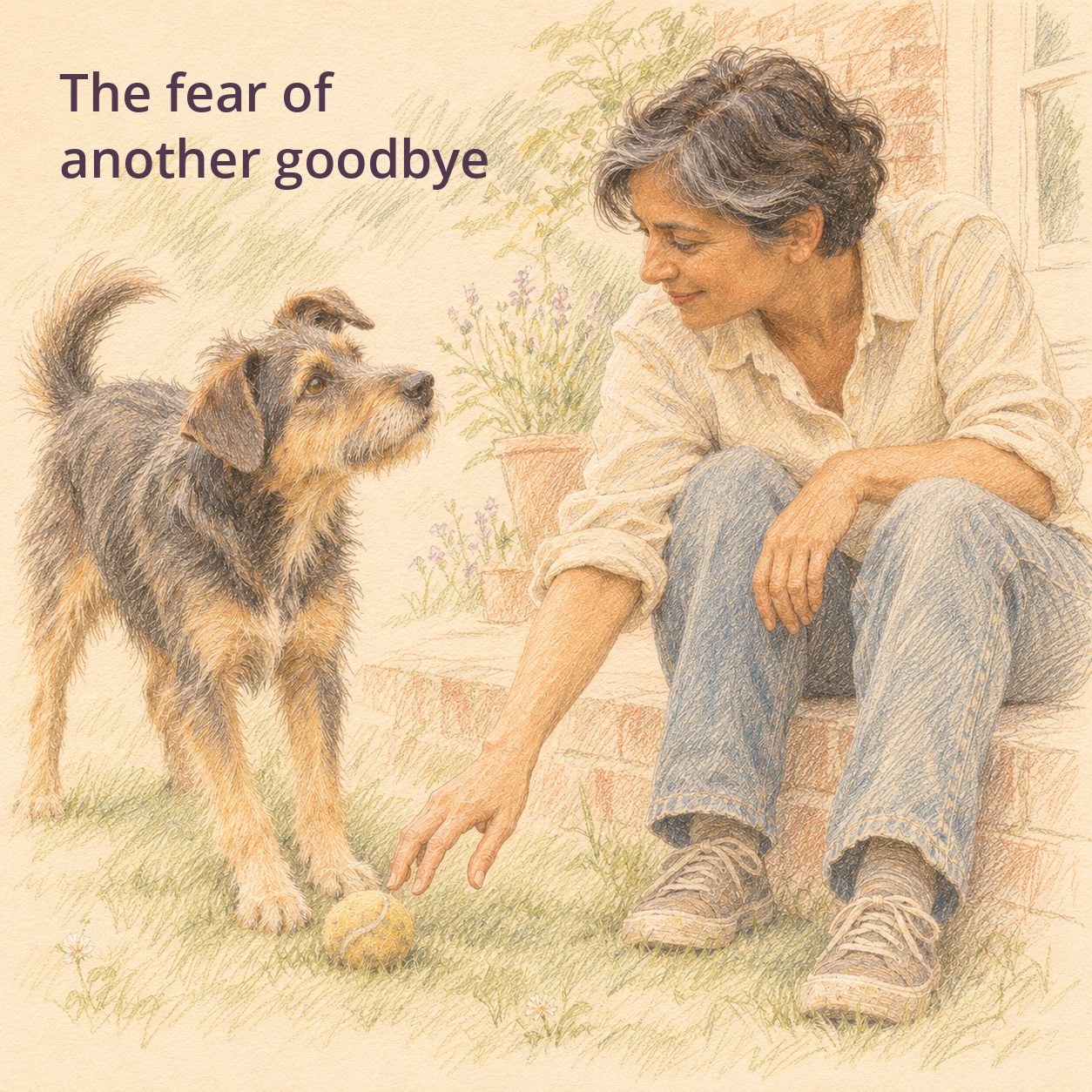
Do you ever find yourself looking up the average lifespan of a particular species or breed, mentally calculating how many years you might have left together? Even birthdays, once a reason to celebrate, can become a source of sadness.
This experience has some similarities with anticipatory grief, which we often talk about in the context of caring for an elderly or terminally ill animal companion. However, the fear of another loss can affect us even when the animals we love are young and healthy.
We may find ourselves mentally rehearsing a bereavement that could be many years away, at the expense of enjoying the years in between.
Finding a balance between caution and fear
One of the challenges of living with a fear of another loss is that our concerns often stem from experience. It’s difficult to dismiss the possibility of something happening when it’s happened to us before.
So, how can we use what we’ve learned from our previous experiences without living in a constant state of anxiety?
- Recognise where your fears are coming from
Are there particular situations that make you anxious? Perhaps you worry whenever an animal sneezes because you’ve previously lost an animal companion to a respiratory illness. Or maybe you find it difficult to trust veterinary advice because a vet once missed something important.
Understanding these connections may help you distinguish between something that needs your attention now and something that has reminded you of a previous loss.
If you frequently worry about illness, talk to your vet about what symptoms to look out for, when to seek advice and what constitutes an emergency. Having some clear guidance may help you feel more confident in your judgement.
It’s also worth remembering that even the most knowledgeable and conscientious animal carers can’t prevent every illness or accident.
- Find ways to feel safe without unnecessarily restricting your lives
If you’ve lost a dog in a road accident, for example, you might decide that you no longer feel comfortable walking another dog off the lead in public spaces. You could hire a secure dog field where you can both relax and have fun without the same worries.
You don’t need to put yourself or your animal companion in situations that make you uncomfortable simply to prove that you’ve overcome your fears.
It may be helpful, though, to consider whether there are things you’re both missing out on because of your anxiety and whether there are alternative ways to enjoy them.
- Bring your thoughts back to the present
Anxiety often focuses our attention on the future. We can experience very real feelings of distress about events that haven’t happened yet and may never happen.
If you’re sitting next to your animal companion worrying about how empty the house will feel when they’re gone, try to bring your attention back to the physical experience of being with them. Feel the warmth of their body next to yours, stroke their fur or listen to the little noises they make when they’re comfortable.
You may find mindfulness exercises that engage your senses helpful if you struggle to concentrate on the here and now.
- Talk about your fears
The people around you may not realise how much a previous bereavement has affected your confidence. Talking to them about your experiences might help them understand why you find certain situations difficult.
You might also find it helpful to speak to other bereaved animal carers in The Ralph Site’s private Facebook group, where you can talk openly about your fears with people who have had similar experiences.
If anxiety about another bereavement is affecting your sleep, your ability to leave the house or your everyday enjoyment of life, you may benefit from speaking to a bereavement counsellor or mental health professional.
Learning to live with uncertainty
For some people, the fear of another bereavement is enough to make them question whether they want to share their life with another animal. Others may find themselves holding back emotionally with a new animal companion because they’re frightened of becoming so attached again.
It’s one of the most difficult aspects of sharing our lives with animals. We often enter into these relationships knowing that we’ll outlive the individuals we love.
And yet, when you think back to the animal friends you’ve lost, would you have wanted to spend less time with them or to have loved them any less because you knew how things would end?
We can’t undo our experiences of bereavement, nor can we go back to the days when we were less conscious of our own mortality and that of those we love.
Perhaps, though, there’s something we can learn from our animal companions about living in the present. They get excited because it’s time for dinner, because their favourite human has come home or because they’ve found a sunny spot in which to sleep.
We hope that, in time, you’re able to enjoy these everyday experiences with them again without feeling quite so apprehensive about what the future holds.
Shailen and The Ralph Site team
The Ralph Site, non-profit pet loss support