Featured post
The Ralph Site - pet loss support

Welcome to The Ralph Site Blog

Hello, and welcome to The Ralph Site Blog.

We celebrate the unique place that pets have in our lives through regular features and practical advice on pet bereavement and other animal-related matters.

Pet loss support

The Ralph Site is a non-profit online pet loss support resource which provides support to pet carers coping with the loss of a beloved companion. There are a website and an active Facebook community with a public page and a private group.

Pet carers’ community

The Ralph Site aims to provide a non-judgmental and supportive place for those pet carers who have lost a much-loved member of the family. We know all too well the pain and heartbreak that accompanies the passing of your pet. And whilst these pets can never be replaced, we may find room to enrich our lives further with others when the time is right.

At The Ralph Site, we understand the special bond between you and your pets.

Thank you for your support.


The link between pet loss and previous bereavements – how earlier grief (human or animal) can resurface 

When we lose a beloved animal companion, the grief can take us by surprise in all sorts of ways. It might feel bigger, deeper or more confusing than we expected. Sometimes, it can even bring back emotions we thought we’d already worked through from past bereavements, whether that was for another animal friend or a human loved one. 

If this sounds familiar, please know that it’s very common. Grief has echoes, and every loss we experience can awaken the ones that came before (see the Ball in the Box and other grief analogies for other ways to explore this). 

Grief doesn’t happen in isolation 

Each time we love deeply, we create emotional connections that shape us. When one of those connections is physically broken, the pain travels along the same pathways that were carved by earlier losses. 

So, when a cherished animal friend dies, your heart doesn’t just respond to that single event, it remembers all the goodbyes that came before it. You may find yourself crying for your childhood dog, a parent, a partner, a grandparent, or even a phase of your life that has long passed. 

This doesn’t mean you’ve gone backwards or that you didn’t “deal with” those earlier losses properly. It simply means that grief lives within us, waiting to be stirred by the presence of love, and by the absence of its source. 

Why earlier grief can resurface 

Our brains and bodies remember what it feels like to be bereaved. The sights, smells, and emotions surrounding a new loss can act as powerful triggers, reigniting memories stored deep within us. 

If you held your cat as they took their final breath, you might suddenly recall holding your parent’s hand when they were dying. If you’re sitting in the quiet of an empty house, you might remember the same hollow silence after another loss. 

Even if years have passed, these sensations can awaken earlier feelings of shock, guilt, longing, and helplessness. It can feel as though all your griefs have joined hands because, in a way, they have. 

The layers of loss we carry 

Every loss becomes part of who we are. When someone we love dies, we don’t replace the love or the pain that came before. Instead, we build on it, layer by layer, until it forms the landscape of our hearts. 

Sometimes, it’s the newest loss that helps us finally reach the older ones. An animal’s passing can open a door to feelings we’ve tucked away for decades. You may suddenly find yourself thinking about an old friend, a sibling, or even a childhood pet whose death you were too young to fully understand at the time. 

Grief is cumulative. It gathers, softens, and changes shape, but it never fully disappears. 

How pet loss can stir human grief (and vice versa) 

The bond we share with our animal companions is often unconditional, built on trust, safety and wordless understanding. Losing that bond can awaken the ache of other relationships that felt less certain or were filled with unresolved emotions. 

If your dog sat by your side when your father died, their loss might bring that memory rushing back. If your cat comforted you through heartbreak or illness, you may find yourself grieving not only them, but the person you were during those difficult times. 

Animals are witnesses to our lives. They see our tears, our laughter, and everything in between. When they’re gone, it can feel like we’ve lost not just them but a piece of our own history, the version of ourselves they loved so unconditionally. 

The emotional domino effect 

Because griefs are so interconnected, one loss can set off a chain reaction. You might find the sadness more intense than you expected or notice emotions that don’t seem to “fit” the situation, such as anger, regret, even anxiety or exhaustion. 

This is your body and mind’s way of processing multiple strands of grief at once. It can feel messy, unpredictable and overwhelming. 

You might even question yourself, “Why does this hurt so much?” or “I thought I’d already healed from that”. 

Please don’t mistake this for weakness or failure. In truth, it’s a sign that your heart is opening to heal in a deeper way. That old pain has recognised a safe moment to surface. 

Making space for all your losses 

When new grief revives the old, it can help to name what’s really happening. Try to notice which memories or emotions have come back to visit. Which loss are they tied to? What do they still need from you – acknowledgement, forgiveness, tenderness? 

You might like to: 

  • Write about the connections. Journalling can help you see how your griefs overlap and what they’re asking you to understand. 
  • Talk it through. Sometimes saying, “This loss reminds me of when I lost…” is enough to bring clarity and comfort. 
  • Honour each loved one in your own way. Light a candle for your animal companion and for the people or animals whose memory they’ve stirred. 
  • Be gentle with yourself. You’re carrying many stories of love, which is something to cherish, not hide. 

You’re not “back at square one” 

It’s easy to feel disheartened when past pain returns, but you’re not starting over. You’re simply revisiting familiar ground with a little more wisdom, perspective and compassion than before. 

Each time you experience grief, you learn something new about yourself, whether it’s your capacity for love, your resilience, or the ways you can honour those you’ve lost. 

In truth, grief doesn’t fade because love doesn’t fade. The two are forever intertwined. When you feel old grief alongside new, you’re not broken – you’re whole, remembering. 

Finding support 

If you’re finding that multiple griefs are surfacing at once, it might help to reach out for support. Talking to a pet loss counsellor, a therapist, or members of The Ralph Site community can give you a safe place to explore what’s rising to the surface. 

You don’t have to untangle these emotions alone. 

Moving forward with love 

As you navigate this tender time, try to remember that your ability to grieve deeply is rooted in your ability to love deeply. It’s also an integral part of the human experience because we are a social species that thrives on connection. 

Every loss, human or animal, has shaped the person you are today. Every being you’ve loved has left a gentle imprint that remains within you. 

When a new grief awakens the old, it’s love calling out to love, a reminder that every bond, every moment of connection, every heartbeat shared was real, meaningful and eternal in its own way. 

With love and understanding, 

Shailen and The Ralph Site team 
The Ralph Site – non-profit pet loss support 

Revisiting the place where your animal companion died or is buried 

If you’ve recently lost a beloved animal companion, you may be wrestling with the idea of returning to the place they died. You might want to do everything in your power to avoid going there or, conversely, feel drawn to visit it. 

You may feel that returning to the scene of your companion’s death will give you clarity about what happened or bring you closer to them. It might be somewhere that’s easy to avoid, or somewhere that’s been a regular or important part of your life, and you want to return. 

If your companion died at home, you probably feel a desperate need to make peace with being there. This can be challenging when your loved one’s final moments are so fresh in your mind. 

Many people feel a similar conflict about where to bury or scatter their companion’s ashes and how it might feel to visit in the future. 

Will you always associate these places with loss, or can visiting them help you heal? 

In each of these scenarios, the challenge is knowing what will help you, both in the short- and long-term, as you find a way to move forward

As with so many decisions associated with grief and mourning, there’s no right or wrong way of doing things, only what feels possible, and kind to yourself, in the moment. 

Things to consider before revisiting 

If you’re thinking about returning to the place where your animal companion died or is buried, it can help to reflect gently on your needs and emotional readiness first. 

  • Self-awareness: Take a moment to tune in to your current emotional state. Are you feeling strong enough to face what might arise? Could this visit offer peace or connection, or is the pain too raw right now? 
  • Support: If you anticipate needing comfort, consider taking someone you trust with you – a friend or family member, or even a fellow grieving carer. If no one is available, you might want to check in with a support group before or after your visit. 
  • Alternatives: If the exact place feels too difficult or is no longer accessible, you might find solace in creating a different kind of memorial. Visiting a meaningful spot, planting a tree or special flower, making a scrapbook, or lighting a candle can all serve as healing rituals in their own right. 

How to approach the visit 

If and when you feel ready to go back, you might find it helpful to approach the visit with gentleness and intention. 

  • Prepare yourself: If the location is unfamiliar now or has changed in some way, gathering a little information in advance might help you feel more grounded. 
  • Create a safe space: Choose a time and setting that feel as calm and private as possible. If you’re at home, perhaps set aside a quiet part of the day. If you’re visiting a grave or vet clinic, you might want to go at a quieter time. 
  • Be open and honest with yourself: There is no right way to feel. Grief is unpredictable. Let yourself cry, smile, speak aloud, or say nothing at all. Whatever surfaces is valid. 
  • Talk about it: After your visit, it can help to talk about your experience with someone who understands. Just putting your thoughts into words can bring relief and connection. 
  • And if you’re the one offering support… Try to listen without trying to fix. Acknowledging what the other person is feeling, without judgement, can make all the difference. 

Graves, gardens, and goodbye places 

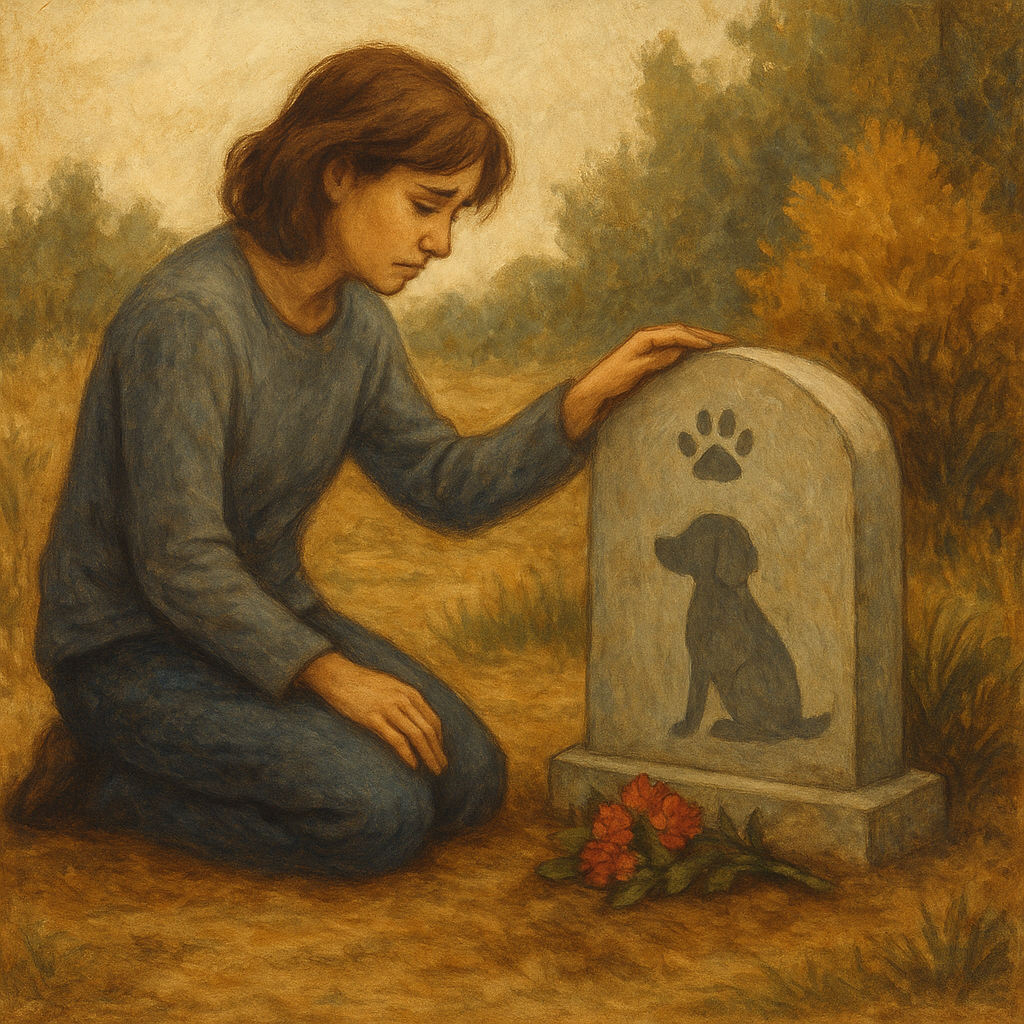
If your animal companion is buried in a garden or special spot, visiting can offer a tangible connection. Some people find peace in tending the area, placing flowers, or simply sitting nearby. 

For others, it’s just too painful. 

Having a grave or memorial space can stir memories – not just of the death, but of the decisions surrounding it – or it may reopen wounds that are still healing. 

Sometimes, time makes it easier. Sometimes, it doesn’t. Only you can decide whether you want a “goodbye place” to visit. 

Certainly, when a human dies, many of us find it comforting to spend time at a graveside or memorial. These spaces provide room for ongoing connection, the expression of grief, solace, and reflection. A growing number of people feel that carers of companion animals deserve the same. 

If it’s important to you to have a memorial space, think about what you’d like it to look like. Do you need a formal grave, or would a special plant in your garden give you a focal point for connection? Could a photo or pawprint in a favourite room be enough? 

And if you’re unsure, it’s OK to wait. Over time, your perspective may change. As you begin to focus more on your animal friend’s life than their death, you may find that your feelings about visiting such places shift too.

When home is the place 

If your companion died at home or lived there for many years, even ordinary things can become painful reminders of the loss. The empty bed in the corner. The space by the door. The silence where once there was movement. 

Routines may echo with their absence, and certain objects or rooms may feel difficult to face. 

Grief often attaches itself to places, objects, and rituals. A particular chair, rug, or view might trigger vivid memories of your companion’s final moments, or the life you shared. 

These constant reminders can feel comforting at times and overwhelming at others.  

To cope, some people find it helpful to slowly soften the associations. This might involve changing the layout of a room, moving a piece of furniture, or putting up a new picture. These gentle changes can help reclaim the space, sending the quiet message: 
“This is still my home. I’m allowed to keep living here. I’m still here.” 

Even small changes like moving a lamp or adding a plant can break patterns of avoidance and create a sense of safety and renewal. 

For others, it helps to leave things as they are. Keeping a bed, bowl, or toy in its usual spot might feel grounding, or like a form of respect. 

Both approaches, and anything in between, are entirely valid. 

If you do make changes, remind yourself: you’re not erasing your companion’s presence. You’re simply trying to find your footing in a space that now holds both love and loss. 

When you can’t go back 

Sometimes, the place where your companion died or was buried is no longer accessible. It might be the vet clinic you can’t face, a former home or garden, or the site of an accident. 

This can bring a unique layer of grief. Not being able to revisit the space might feel like another loss, a door that’s closed before you were ready. 

But memory is a powerful place, too. 

You don’t need to physically journey to where your companion died to honour your loss or find meaning in it. That ability lives within you. 

Vet clinics and difficult memories 

For many people, the final goodbye happens at a veterinary practice. These visits often leave strong emotional imprints. Just the thought of going back, for any reason, can trigger a wave of grief. 

If you’re struggling, consider phoning ahead. Let the receptionist know how you’re feeling. They may be able to suggest a quiet time or even meet you outside, so you don’t need to wait inside the clinic. 

You don’t have to be brave, just honest about what you need. 

And if you choose never to return, that’s OK too. You’re allowed to protect your wellbeing. 

What revisiting can bring 

Returning to the place where a loved one died can be a key step in healing. For some, it helps to integrate the loss into the wider story of love. It can also bring a sense of closeness, a place to speak your thoughts aloud and say what wasn’t said. 

You might feel waves of emotion. You might feel nothing at all. You might feel peace, or longing, or even a kind of comfort. 

Only you will know 

We say it often at The Ralph Site, but it bears repeating: There’s no rulebook for grief and no checklist for healing (though we wish it were that simple). 

Whether or not you revisit the place where your animal friend died or is buried is a deeply personal choice. 

You might go and feel a little lighter. You might decide you’re not ready. You might never want to go back. 

It’s your choice, and you can always change your mind. 

Love makes places sacred, but your memories travel with you, wherever you are. What matters most is that you give yourself the grace to feel whatever comes. 

Just know that whatever you do or don’t do, the bond you shared with your animal companion remains. 

Shailen and The Ralph Site team  
The Ralph Site, non-profit pet loss support  

Grieving the loss of a “difficult” animal companion

Not every bond between humans and our fellow animals is easy. 

Some animals come into our lives with big feelings, complex needs, or past experiences that shape how they move through the world. They might be reactive or fearful or have health challenges that affect their behaviour. Or they might struggle to adjust to the routines of domestic human life (often, when an animal is dubbed “difficult”, it’s because their behaviour doesn’t fit with current human society). 

Thinking of your own animal friend, they may have needed medication, special care, or ongoing behaviour management, which added extra pressure points or complications to your shared days. Their needs might have dictated where you went, who you saw, who was able to visit your home, how much sleep you got, and how you lived. 

And still, you loved them. You loved them with your whole heart and soul, perhaps because your bond was hard won, messy at times, and completely one of a kind. 

If you’re grieving an animal friend who was considered “difficult” – whether due to behaviour, health, or emotional challenges – we are so sorry for your loss. 

When the relationship was complicated 

Sometimes the love we feel for an animal companion lives side by side with frustration, fear, or exhaustion. Maybe your animal friend growled, hissed, scratched, or bit. Maybe they destroyed furniture, showed aggression toward other animals, or were constantly on edge. Perhaps they had complex health needs that left you managing intensive care routines or responding to crises at all hours. 

While dogs are often the focus in conversations like this, animals from almost any species can be dubbed “difficult” or “challenging” for one reason or another. 

Cats may struggle with anxiety or react unpredictably. Rabbits and small animals can be skittish, difficult to handle, or show aggression, especially if they weren’t well-socialised or introduced to human contact early in life (this isn’t always a deciding factor, but it can be).  

Birds can be loud, destructive, or territorial. Reptiles may need extremely specific care that is hard to get right. And horses – sensitive, intelligent beings that they are – can be challenging to handle if they exhibit behaviours like bolting, biting, or refusing to be caught, which can be dangerous and emotionally draining for their carers. 

None of this means you loved them any less. It simply means your relationship required a different kind of patience, a different kind of energy, and a different level of understanding. And when that relationship ends – through illness, accident, old age, rehoming, or behavioural euthanasia – the grief can feel especially layered. 

When you were part of the inner circle 

Let’s also take a moment to acknowledge how life-changing a relationship with a so-called “difficult” animal can be.  

There is something so profoundly special about being in their inner circle. You may have been one of the few people they trusted, the one who got to see behind the fear or reactivity to the softness underneath. You knew their quirks, the look they gave you when they were curious or unsure, the tiny ways they showed affection that others might never have noticed.  

Being their safe space may have been hard at times, but it was also a privilege.  

Sometimes we end up loving our more challenging companions even more fiercely than our laid-back friends. Because, while it wasn’t always easy, we saw who they really were (and they saw us too).  

This partnership taught us patience, resilience, empathy, and what it means to be truly chosen. 

You may find it helpful to read our blog about loving a reactive dog, where we explore the emotional toll and beauty of these kinds of bonds. 

What you might be feeling 

You might be feeling guilt, sadness, confusion, or relief. You might be grieving the loss of a daily routine that, although difficult, gave shape and meaning to your life. You might miss their presence even if it was unpredictable or overwhelming.  

Or you may be experiencing complex emotions that are difficult to express in words. 

You might also feel shame for feeling angry sometimes, for resenting the situation, or for struggling with the emotional and physical toll of caring for your animal friend during the hard times. You may be haunted by decisions you made, especially if you had to say goodbye in circumstances that didn’t feel ideal. 

Please know these emotions are human. They don’t cancel out the love. It is possible to feel deep sorrow and a sense of relief. To feel heartbreak and peace. To miss them and remember the struggle.

When people say the wrong things 

Grieving the loss of a “difficult” animal friend can be especially painful when others don’t understand. Well-meaning people might say things like, “At least you can have a break now,” or “At least life will be easier,” as if your animal companion was more burden than blessing. 

Even if you had moments of thinking those things yourself, hearing them from someone else can feel like a dismissal of everything you shared, including the effort, growth, and love. It can make the grief feel invisible. 

The truth is, many guardians of complex animals would give anything for one more day, one more moment, even with all the challenges. Because the difficult moments were just one part of a bigger picture, which included a bond built on deep trust, hard-won progress, and unconditional care. 

If you’re feeling hurt by what others have said – or not said – please know that your grief is valid. You don’t need anyone else’s permission to mourn. You knew the full story, and you’re allowed to grieve it fully. 

If behavioural euthanasia was part of the story 

Some guardians reach a point where safety, suffering, or quality of life means making the painful decision to say goodbye. If you had to make that decision due to behavioural challenges, please know that you are not alone. 

This kind of loss carries a very particular weight. It may be hard to talk about. Others may not understand and can be quick to share their opinions. You may question whether you tried hard enough, whether you loved deeply enough, or whether you gave enough chances. 

But you did what you could, with the information and resources you had, at the time you had to make the decision. Most guardians only consider behavioural euthanasia when every other medical and behavioural option has been considered. That deserves gentleness.  

You gave your animal friend time, effort, care, and love, before making a decision that was rooted in compassion, not convenience. That matters. 

If the story came to a natural end 

Even if your animal friend died of natural causes, it doesn’t mean the story was simple. You may have experienced years of navigating challenges (such as helping them feel safe to be examined by a vet), rebuilding trust, adapting to setbacks, and learning along the way. Perhaps you made mistakes and carry regrets, but hopefully, you also carry pride in how far you both came. 

The end of a long, sometimes fraught relationship can bring space for reflection. You might find yourself replaying memories, noticing both the hard and the beautiful moments. Let yourself honour all of it, from the missteps to the milestones. You will always remember the path you walked together. 

Coping with this kind of grief 

Here are a few ways you might support yourself: 

  • Be honest with yourself. You can love someone and still find them hard to live with. It doesn’t make your grief any less real, and it doesn’t mean you loved them any less than if things had always been easy. 
  • Write a letter. Express everything you feel – the good, the hard, the in-between. Let the complexity out. 
  • Talk to someone who understands. If you can, connect with a friend or even a counsellor who knows this kind of loss. 
  • Create a ritual. Light a candle, say their name, or create a small memory space. Honour their life as it was. 
  • Make space for mixed emotions. Try not to judge yourself for what you feel, even if those feelings shift from one day to the next. 
  • Acknowledge what you gave. Time, patience, adaptation, and resilience are all acts of love. 

Grief isn’t just for the easy relationships. It’s for the messy, complicated, real ones too. 

You loved them 

You showed up for your animal friend when they needed you. You adapted, you learned, you tried. And whether you felt connected every day or struggled sometimes to understand each other, the love you gave counts. 

You don’t have to tidy your grief into a neat box, nor do you have to justify the pain. Just let it breathe. 

Your animal friend was one of a kind, and your love for them was, too. 

Shailen and The Ralph Site team  
The Ralph Site, non-profit pet loss support  

Unexpected pet loss grief: Losing an animal companion who you were just beginning to bond with 

Sometimes, pet loss grief takes us by surprise.  

We expect it to feel overwhelming when we lose a long-term animal friend – someone who shared years of our lives, who knew our routines and moods, who felt like a part of the family. 

But what if the bond hadn’t fully formed yet? 

What if you’re grieving the loss of a newly adopted dog or cat (or any other species), a foster animal, or an animal companion you were caring for temporarily – and you weren’t expecting to feel so much? 

You might be left with a confusing mix of sadness, guilt, anxiety, or even embarrassment about how much you’ve been impacted by this loss. Maybe you’re wondering, “Do I have the right to feel this upset?”  

The short answer is: Yes, you do. 

Grief isn’t proportionate to the time spent together 

Emotional bonds don’t always need years to form or matter. Sometimes, an animal companion can touch our hearts in days, hours, or even moments. You might have been imagining a future with them – one that now feels stolen. 

Connection can form quickly, especially if you’re a compassionate, empathetic person. When we welcome a new furry or feathered friend into our lives, we open ourselves up to caring deeply. That willingness to love and protect creates a bond, even if it hasn’t had time to deepen fully. 

Perhaps you felt protective the moment your animal friend arrived, especially if they were nervous, unwell, very young or very old, missing a previous caregiver, or recovering from past trauma. Maybe you found yourself constantly checking on them, adjusting your routines to meet their needs, or feeling joy when they began to trust you, even just a little. 

These small, quiet interactions matter. They lay the foundation for a relationship that would have grown over time. And when that possibility is taken away suddenly, the grief can feel like a rupture. 

Guilt, confusion, and the emotional weight of grief 

Unexpected grief in situations where the bond is new and developing often comes tangled with guilt and confusion. You might wonder: 

  • Did I do enough for them? 
  • Should I have bonded with them more quickly? 
  • Why am I this upset when I barely knew them? 

There might be things that you regret, such as not taking more photos, not recognising symptoms sooner (this might have happened because you didn’t know what was ‘normal’ for your new companion), or not giving them more of your attention in the short time you shared – even though you probably spent every minute with them that you could. 

This kind of grief can feel especially raw because it includes the pain of unrealised potential. You were just beginning to learn about each other, just starting to make space in your life and heart – and now that space feels hollow. 

You may feel sadness, guilt, shock, helplessness, or a sense of yearning for what could have been. You might also feel emotionally conflicted, especially if you took in this animal friend on a short-term basis or weren’t sure yet how you felt. 

All these emotions are valid. 

Be gentle with yourself. Love often grows in quiet ways, and we don’t always realise how deep the roots are until we feel the absence. 

Invisible grief 

One of the hardest parts about this kind of loss is that it can feel invisible to others – another form of disenfranchised grief

You might not have shared many updates about this animal friend. There might be no collar to tuck away, no favourite toy to place on a shelf. People around you might not even know you were caring for them. 

Even if your network did know, they may not understand your feelings about losing this new animal companion, especially if they only view time spent together as a measure of connection. 

These circumstances can make your grief feel lonely. 

But just because a loss isn’t widely recognised doesn’t make it any less real. You’re allowed to mourn the relationship you were still building. The moments you won’t get to share. The hopes you quietly carried. 

Ways to honour the connection and cope with the pain 

Even if your time together was brief, you can still honour the bond you had – or the bond that was beginning. 

Some people find comfort in: 

  • Talking to someone who understands animal loss 
  • Journaling about what this loss has brought up 
  • Donating in their name to a rescue or foster organisation 
  • Naming your feelings and acknowledging that grief doesn’t require a long history 
  • Visualising your animal companion by your side, offering comfort 

It can also help to find small ways to soothe your nervous system. Gentle walks, warm baths, time in nature, or spending time with other animals can bring a sense of calm. If you feel overwhelmed or stuck, speaking with a grief counsellor or therapist can offer support

Sometimes, telling your story to someone who will simply listen is one of the most healing things you can do – a lot of people do this in The Ralph Site’s private Facebook group

Grief is grief 

Whether you had a lifetime with your animal friend or just a few short days, grief is grief. It doesn’t need to be earned. It doesn’t need permission. 

You opened your heart to them. That counts. And if you’re hurting, it’s because love was there – or growing. 

Let yourself grieve. Let yourself remember. The bond may not have been fully formed, but the love was real. And that is always worth honouring. 

Shailen and The Ralph Site team  
The Ralph Site, non-profit pet loss support  

Grieving the animal trauma companion who was your safe place 

Some animal friends do more than offer love and companionship. They become our safe place. They help us survive things we don’t know how to explain, things we might not have survived otherwise. 

If you’ve lost an animal friend like this, someone who might be termed a “trauma companion”, then your grief may feel especially deep, complicated, or raw. You might not know how to begin untangling it. And that’s OK. 

More than a companion 

For people who live with trauma, anxiety, depression, or other mental health challenges, an animal companion can offer something few humans can: consistent, unconditional presence. 

Maybe your dog lay across your chest during panic attacks, grounding you and helping you breathe. Maybe your cat curled up beside you when no one else knew you were hurting, staying close without needing you to explain. Maybe your rabbit, guinea pig, snake, or bird gave you a reason to get out of bed each day, reminding you that your presence mattered. 

These animal friends become emotional anchors. Their routines give us structure. Their physical presence helps regulate our nervous systems. The sound of their breathing, the weight of their body, the feel of their fur or feathers against our skin can all bring a powerful sense of security, calm and connection. 

When you’ve experienced trauma, the world can feel unpredictable and unsafe. An animal companion often brings reliability and peace in a way that builds trust over time. Their companionship might feel like the only part of life that made sense. 

It’s not “just” grief 

If your furry, feathered or scaly friend was part of your healing journey, losing them might feel like losing part of yourself. You may feel as though the progress you’d made is slipping away, like you’re back in the darkest place you ever were. You might even feel ashamed for struggling so deeply. 

But please know, you’re not going backwards. 

Grief is not a sign that you’re broken, that your feelings are unusual, or that you won’t find a way to move forwards. It’s a sign of the depth of your connection. 

You are grieving a very real, very significant loss. One that touches parts of you that other people may never see. One that deserves space and compassion. 

You don’t have to justify your pain. It matters. 

What makes it harder 

Sometimes, the people around us don’t understand the grief of losing an animal companion. They may say things like: “It was just a dog”, “You can get another one”, or “At least it wasn’t a person”. 

Comments like these can feel dismissive or even cruel, especially when your animal friend was your emotional lifeline. They weren’t an “it”, an item to be replaced like a mobile phone or a piece of furniture; they were a sentient being, a once-in-existence individual, and they deserve to be remembered as such. 

On top of that, the grief of losing them might stir up other pain. Their death may reactivate old wounds or unresolved trauma. You might feel abandoned all over again. You might find yourself revisiting past losses, childhood grief, or times you felt unseen or unsupported. Please know that this “normal” (if there is such a thing!) 

Grief rarely arrives in neat packages. It tends to show up in waves, and it often carries echoes from other times in your life – the ‘Ball in the Box’ analogy explains this brilliantly

How to cope: gentle steps forward 

Grief after losing a trauma companion can feel overwhelming, even terrifying. But there are ways to support yourself through it. 

Here are some ideas that might help: 

  • Allow yourself to feel. Try not to rush your grief or push it aside. Cry if you need to. Sit in silence. Name your feelings without judgement. All of it is valid. 
  • Keep a journal. Record memories, emotions, and anything else that helps you express what you’re going through. Writing can provide clarity and relief. 
  • Speak with a therapist. A counsellor, particularly one trained in trauma, grief and/or pet loss, can help you process your loss in a safe, supportive space. 
  • Reach out to others. Consider joining a grief group (in person or online) or connecting with others who understand what it’s like to lose an animal companion who helped them through trauma.  
  • Create something lasting. A scrapbook, a memorial, a piece of art, or a donation in their name can offer a sense of legacy and continuity. 
  • Visualise your animal friend by your side. Some people find comfort in imagining their beloved companion sitting beside them, offering silent support. Even though your animal friend is no longer physically present, picturing them nearby can help you feel grounded, supported, and less alone. 

Some people find it helpful to make a plan for how you want to handle the tough moments: anniversaries, certain times of day, or routines that now feel empty. Having supportive people on standby, comforting activities lined up, or even calming breathing exercises can ease the intensity. 

You are not alone 

If your animal companion was your safe place, grieving them can feel like the ground has shifted beneath you. It can be isolating, especially if others don’t understand. 

But please know, you are not alone. 

Many people have experienced this kind of loss. It’s profound. It’s real. And it matters. 

Your animal friend saw you in your hardest moments and stayed by your side. They made a difference in your life. Their love doesn’t disappear. It lives on in your heart, your memories, and the strength they helped you find. 

Shailen and The Ralph Site team 
The Ralph Site, non-profit pet loss support