Monthly Archives: October 2016

Halloween hounds and creepy cats

With Halloween fast approaching we thought it might be fun to take a light-hearted look at some of the stories and legends surrounding spectral animals. Whether or not you believe in ghosts and things that go bump in the night, there have been countless stories over the years relating to the links between humans and animals that are difficult to break once pets have passed; whether these links are emotional, spiritual or supernatural. Friends of The Ralph Site know all too well that pets possess souls, and where there have been loving bonds through life, who is to say that these are completely cut after death?

Spirit guides and familiars

European folklore since medieval times has spoken of animal guides, or familiars – supernatural entities that helped witches in their practice of magic and the dark arts. Legend has it that a witch’s familiar was a black cat, but there are many recorded tales of rats, toads, ferrets and hares also taking this role.
During the English Civil War, the Royalist general Prince Rupert was always accompanied in battle by his poodle Boye. The dog was greatly feared among the Parliamentarian forces and was credited with possessing supernatural powers, working as a familiar to influence the outcome of combat. So much so that the poor animal was eventually shot by opposition forces, allegedly with a silver bullet.
halloween-hounds-and-creepy-cats-pinterest

The Demon Cat of Washington DC

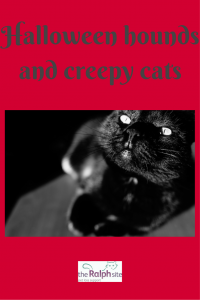
For centuries legend has spoken of a Demon Cat that haunts the Capital Building in Washington D.C. A black, and decidedly feline spirit is said to appear during times of great political strife, natural disasters, or on a central dias in the rotunda following the unexpected death of a president. Roaming throughout the building, its unsettling presence has been seen and felt by many, with several guards having reported the ghostly cat physically attacking them.

Haunting Hollywood hounds

In Hollywood Cemetery in Richmond, Virginia is the final resting place of author Ellen Glasgow. When she died, she stipulated in her will that her two pet dogs be exhumed from her garden and buried with her. There have been many who claim to have since heard the creatures scampering around the grave late at night!

Los Angeles Pet Cemetery

This eminent spot is the final resting place for many of Hollywood’s famous animal actors – Hopalong Cassidy’s horse Topper and Petey the pitbull who starred in the movie Little Rascals to name but two. Most are peaceful in their eternal rest, but Rudolph Valentino’s Great Dane Kabar is said to roam regularly through the cemetery, licking anyone who stops at his grave.

Happy Halloween everyone!

Until next time, very best wishes from Shailen and The Ralph Site team
The Ralph Site, non-profit pet loss support

Please note: The Ralph Site is not affiliated with the third-party organisations in any of the links shared here, and the views, ideas and suggestions expressed in this and other blogs are simply shared with the intention of helping you, our friends, take care of the special animals in your lives.

Making sure Bonfire Night doesn’t go with a bang!

With Halloween and Bonfire Night fast approaching, we thought it would be useful to remind our readers of some practical steps that you can take to help your pets stay calm amidst the inevitable bangs and whizzing noises experienced at this time of year.

It goes without saying that outdoor pets are more exposed to the sights and sounds of Halloween and Bonfire Night, and so we recommend checking on them regularly to reassure yourself that no ‘tricks’ have been played near the hutch, and that any stray fireworks or sparklers are safely removed. If you can, move your pet’s hutch into a garage or shed for added protection and noise insulation, and if this is not possible, add plenty of extra hay and place some old carpet over the hutch to dull the noise and provide extra warmth.

making-sure-bonfire-night-doesnt-go-with-a-bang
Many dogs and cats are likely to find unexpected loud noises stressful (the RSPCA estimates that 45% of dogs exhibit signs of stress when they hear fireworks). With a little bit of preparation, you can lessen the effect on your cats and dogs – listed here are our Top Ten Tips, including some products that you may wish to buy now so that you’re ready:

  1. In the run up to Bonfire Night, start letting your cat out or taking your dog for a walk earlier in the evening so that they are used to a new routine rather than being stressed by a big change on the night.
  2. Consider using an Adaptil spray on your dog’s blankets and toys – by mimicking the appeasing pheromones produced naturally by the mother it helps to calm your dog down. For cats, Feliway sprays work in the same way. Both products are available either from your vet or online, along with plug-in diffusers.
  3. Build a safe, dark, comfortable den in a quiet place indoors, and place your pet’s favourite toys, treats and blankets in it.
  4. Leave the door to the room where you have made this den open, or provide space for your pet to come and go freely – shutting your cat or dog in will only increase their stress levels.
  5. Lock or block any cat flaps so that your pet cannot escape, and provide a litter tray, plenty of food and water and a comfortable blanket.
  6. Keep all doors and windows closed, drawing curtains and blinds to keep the noise to a minimum.
  7. Sit with your dog or cat, helping them to relax by following a normal evening routine and with music or the television on in the background.
  8. If your pet shows any signs of fear try to ignore their behaviour. Don’t punish or fuss over him / her as this will give the message that what they are doing attracts attention, and thus makes things worse in the long run.
  9. If you know a dog that isn’t scared by noises (and is already familiar to your own dog), keeping the two together during the evenings may help demonstrate that there’s no need to be afraid.
  10. If your pets are not already microchipped, it’s a very good idea (and a legal requirement for dogs) to get this done. That way, if your pet does manage to escape and runs off, or hides somewhere unfamiliar, he / she can be safely and quickly returned to you.

We wish you all a safe and calm Bonfire Night!

Until next time, very best wishes from Shailen and The Ralph Site team,
The Ralph Site, non-profit pet loss support

Please note: The Ralph Site is not affiliated with the third-party organisations in any of the links shared here, and the views, ideas and suggestions expressed in this and other blogs are simply shared with the intention of helping you, our friends, take care of the special animals in your lives.

Ticked off

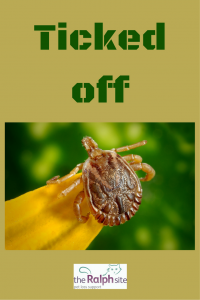
A study by scientists at the University of Bristol was published recently, investigating the prevalence of ticks in the UK’s pets. Researchers working for the Big Tick project studied 15,000 dogs across the country that had visited the vet for an unrelated reason. The data showed that 31% of these dogs had at least one tick present, unbeknown to their carers, with the highest number of cases found in the southwest, East Anglia and Scotland. The tick population is rising year-on-year, and whilst higher rates of tick-borne disease are currently found in continental Europe than here in the UK, there is some evidence that the number of cases of Babesiosis (a malaria-like condition transmitted by ticks) is growing in the East of England. It’s more important than ever to check your pets regularly for ticks.

ticked-off

What’s the problem with ticks?

Ticks can transmit bacteria, causing a range of potentially serious conditions such as Lyme disease; so if you spot one it’s important to remove it correctly as soon as possible. It’s a good idea to get into the habit of checking your pet for ticks after a walk and carefully removing any you find. Using a special tick remover (available online or from your vet), or a pair of fine-tipped tweezers, grasp the tick as close to the skin as you can and pull upwards with a twist, slowly and firmly. Take care not to leave the mouthparts behind as these can become infected.

The signs of Lyme disease in pets can be quite subtle and so your vet will carry out blood tests to accurately diagnose the condition if they suspect your pet may be affected. Treatment is usually a four-week course of suitable antibiotics.

Possible signs of Lyme disease include:

  • Lethargy
  • High temperature
  • Swollen joints
  • Enlarged lymph nodes
  • Reluctance to eat / reduced appetite

Lyme disease can also affect humans and often presents with a characteristic ‘bulls eye’ rash. This is a serious disease and you should seek medical advice if you are concerned. More information can be found here.

What can I do to protect my dog or cat from ticks?

  • We recommend using a monthly tablet or spot on treatment to protect against ticks. It is best to ask your vet for advice as to which is best for your pet as some supermarket-bought spot-on treatments for dogs can be fatal to cats. 
  • Check your pet regularly after they have been outside – ticks live in areas of dense vegetation and long grass and can easily attach themselves to a passing dog or cat.
  • If you are taking your pet abroad on holiday, under the conditions of the Pets Travel Scheme you must ensure your pets are fully protected against ticks whilst you are away.
  • If your pet exhibits any of the symptoms above or becomes generally unwell, please call your vet for advice.

Until next time, very best wishes from Shailen and The Ralph Site team

The Ralph Site, non-profit pet loss support

Please note: The Ralph Site is not affiliated with the third-party organisations in any of the links shared here, and the views, ideas and suggestions expressed in this and other blogs are simply shared with the intention of helping you, our friends, take care of the special animals in your lives

World Animal Day

This week marks World Animal Day, which takes place each year on October 4th, the feast day of St Francis of Assisi who is the patron saint of animals and the environment. First established in 1931 at a convention of ecologists in Florence as a way of highlighting the plight of endangered species, the mission of World Animal Day remains hugely important:

world-animal-day-pinterest

“To raise the status of animals in order to improve welfare standards around the globe. Building the celebration of World Animal Day unites the animal welfare movement, mobilising it into a global force to make the world a better place for all animals. It’s celebrated in different ways in every country, irrespective of nationality, religion, faith or political ideology. Through increased awareness and education we can create a world where animals are always recognised as sentient beings and full regard is always paid to their welfare.”

You can find out much more at www.worldanimalday.org.uk

The Great British public has historically supported animal welfare very well, and animal charities receive millions of pounds in donations every year. They receive no state funding for their important work, although the Treasury does exempt donations from income tax in the form of Gift Aid. However, a study by the Charities Aid Foundation found that animal welfare organisations received only a very small proportion of total donations – just 7% of the amount donated to charities in the UK in 2014. One reason for this relatively low support, despite the British famously being a nation of animal lovers, is perhaps because of the sheer number of charities competing for funding. With so many options available it’s tempting to give your hard-earned money to the big players that everyone knows.

Of course, any money donated to causes helping animals is to be celebrated, but it feels important to acknowledge the smaller, regional and local charities struggling to do great things in our own neighbourhoods. Perhaps anyone considering giving money to an animal charity, either as a regular gift, a one-off donation or through a legacy in a will, might also consider undertaking a little bit of research to identify the charities that make the biggest difference to the health and welfare of animals. In this way we can ensure that any money we do give is working the hardest for our four-legged friends.
If you would like to find out more about charities close to you and make a donation in honour of World Animal Day, you can find details of all the UK’s registered charities here.

Some of the most practical help you can give is not financial. Perhaps you have a spare hour to:

  • Walk a dog?
  • Deliver leaflets?
  • Help out at the charity’s shop?
  • Hold a jumble sale or cake bake to raise much-needed funds?
  • Instigate a petition and circulate via social media?
  • And don’t forget the collection points for pet food and toys at many supermarkets – next time you’re doing the shopping, why not pop an extra tin of food in the trolley and donate it to an animal in real need?

However you choose to help, your contribution will go a long way to helping give animals a better deal – which of course is important at any time of year, not just around World Animal Day.

Until next time, very best wishes from Shailen and The Ralph Site team
The Ralph Site, non-profit pet loss support

Please note: The Ralph Site is not affiliated with the third-party organisations in any of the links shared here, and the views, ideas and suggestions expressed in this and other blogs are simply shared with the intention of helping you, our friends, take care of the special animals in your lives.